Finance

  • Connecting the Dots: My Journey with AI Agents and the Reality of Compute

    Connecting the Dots: My Journey with AI Agents and the Reality of Compute

    The author explores the transition from using AI chat interfaces to employing agentic workflows for complex tasks. By treating AI as a collaborative staff member rather than a simple tool, the author achieves more in-depth analytical work despite challenges with platform-imposed resource limits and account access.

    Limitations in proprietary systems lead to an investigation of local, open-source models, which highlights the necessity of powerful hardware and GPU resources. These technical constraints suggest that successful investing in the AI sector requires a deep understanding of infrastructure and resource allocation beyond mere financial metrics.

    It is very rare to visualize the importance of a piece of concept if you don’t directly work in that field. Like really see it with your own eyes. For example, the importance of safety and security, in any industry, is most often felt and emphasized only after bad things happen.

    I had one of these moments when I connected many dots from investing in stocks to getting disabled by Anthropic out of my Pro account (a whole different story).

    My understanding of AI and the AI-related tech industry is close to 0.1. At its best I’m an AI enthusiast – I try different models and tools and read news and that’s that. Oh and I watch a lot of Youtube videos on this topic. 

    My tiny ah-ha really is really just about two and a half dots.

    The first dot: ai agents are real and they are the service industry as much as they are in the tech industry. 

    I have been using different models since GPT-4 on a regular basis and most of my use cases revolve around the chat experiences. I send over questions and documents, and ask LLMs to give me answers and solutions. It was not until the recent two weeks that I had to rely on Claude Cowork to rush out a in-depth analytical presentation for a high-stake meeting, that I realized the power of the agentic workflow and experience. 

    To be honest I hate this name – agentic – as it emphasizes more on its hype than its essence. To me, the difference (between working with something like Claude Cowork and working with the Chat) is this:

    You give a goal you want to achieve to the “agent” and it is the agent’s responsibility to figure out how to achieve it. 

    You cannot treat it like a tool to get answers from. It is much more than that.

    As a matter of fact, I feel I can do the same thing in Claude chat (the normal thing in your browser) and because the model is so smart that it can just break down the task to steps and then call the necessary tools. The only difference is that it doesn’t create the documents directly on your computer and you have to upload and download them manually. 

    So the biggest difference maker is still me: I stopped assuming that Claude needed lots of handholding and started asking difficult questions. I raised the bar – like I started to talk to it (like literally talk into the chat box via voice-to-text) like a staff member. What works. What doesn’t work. I show emotions by praising the work when the work is well done, and giving harsh feedback when the same mistake appears.

    The result was good, but not in ways that I had assumed. It didn’t really save too much time – as work expands to whatever time is available to finish the work. However, I’d say for the same time period, the work is definitely at least 50% more in-depth with much more data analyzed. I didn’t have to rely on my own to swim in the spreadsheet to discover insights. I just asked Claude to do that for me, and I just “guided” it to the conclusion I needed.

    If you are interested in this whole process you can read it here.

    The second dot: models are powerful but their ability to serve me (and you) is bound by availability of resources aka. tokens, and the mercy of model companies 

    I subscribed to Pro level and gained access to Cowork. Cowork, as powerful as it is, consumes tokens MUCH faster than normal chats. If you have multiple documents such as word docs or excel spreadsheets, these will all be read and counted as inputs.

    But it is necessary. Cowork’s power to work on the project level inside a folder with multiple documents is just another level. Once I tried that I just cannot go back to chatting. 

    Then I found myself checking the Usage page (Setting->Usage) on how much tokens are left and when the next session begins much more often. There is a name for this – anxiety. Claude once consumed 60% of the session tokens in just one attempt, and it was its fault because it forgot my way of working. 

    The result of my work is really at the mercy of Claude. Like how much tokens it gives directly influences how much work can be done in an afternoon. 

    And Claude doesn’t tell me how much token I have access to. At least I don’t know. And it could potentially decide one day that I’m not a worthy customer with my $20/month and all the compute and tokens will be distributed to the more generous enterprise customers. Or I could just be disabled (which I was).

    I feel like the same thing has happened to OpenAI too. I remember back in the day, ChatGPT would give really good answers although I was just a free user. Now that they start to emphasize making a profit, all the answers I get are bullet points. Like that is just humiliating. This just doesn’t make any sense; obviously the models are NOT becoming less powerful; even if OpenAI stopped further researching on more powerful models after GPT-4 the experience should at least remain the same, not worse. It is apparently a matter of resource allocation – or re-allocation – where precious resources go from serving people generating zero revenue (like me) to serving people paying.

    But what are tokens, really? And why am I (or anybody else) bound by its availability and why do I have to pay for them? All I can see is just a bar showing how much is left. What are the model companies such as OpenAi or Anthropic paying for that I only read about from the news – e.g. OpenAI wants to invest 100 Billion dollars building these data centers with the most advanced Nvidia GPUs?

    The third dot: these big model companies cannot be trusted but open source models are not free either. 

    Even before I was locked out of my Claude account, I had this hunch that open source models should somehow at least be part of my workflow, to lower the costs. As I was going through a Claude Code tutorial (an official one) I wanted to be a smart ass and instead of using an official Claude API key, I asked Claude Code (with my official account info signed in) to rewrite the essential codes so that I could hook up an OpenRouter API and use whatever model I wanted. I wasn’t sure if this was the real reason I got banned (and not one does), but on the same day I did it, I was locked out. 

    I got set back one generation away from my effective workflow and I desperately wanted to at least restore my ability to work on a project level. I am determined to make it happen whatever it takes. I still haven’t managed to accomplish this, but I have faith.

    With some research and Youtube video watching, it dawns on me that I can download open source models on my computer and just use it locally – without any API key, not even with the Internet! That is just mind blowing for me as for me, I never really experienced anything good that is free. And this is just next level. 

    Well, not so much. As it turns out, my M1/16GB-memory MacBook Air can only work with the most basic models. I downloaded Ollama and then Qwen3 with the 8B parameters and started chatting with the model in my terminal. It was so clunky and I felt like talking to ChatGPT 3. It is not smart at all. 

    Why is that though? Why I cannot use some of the more powerful models? I know Anthropic and OpenAi models are pripeirtary, but why open models with more parameters are also out of my reach at least according to the Youtube video tutorials?

    The answer comes to hardware. My computer aka. the hardware is not powerful enough to support the larger and more powerful local models. So in this sense, the model doesn’t care who it is – you, me, Anthropic, or OpenAI – if a more powerful model is needed, a more powerful hardware is required. 
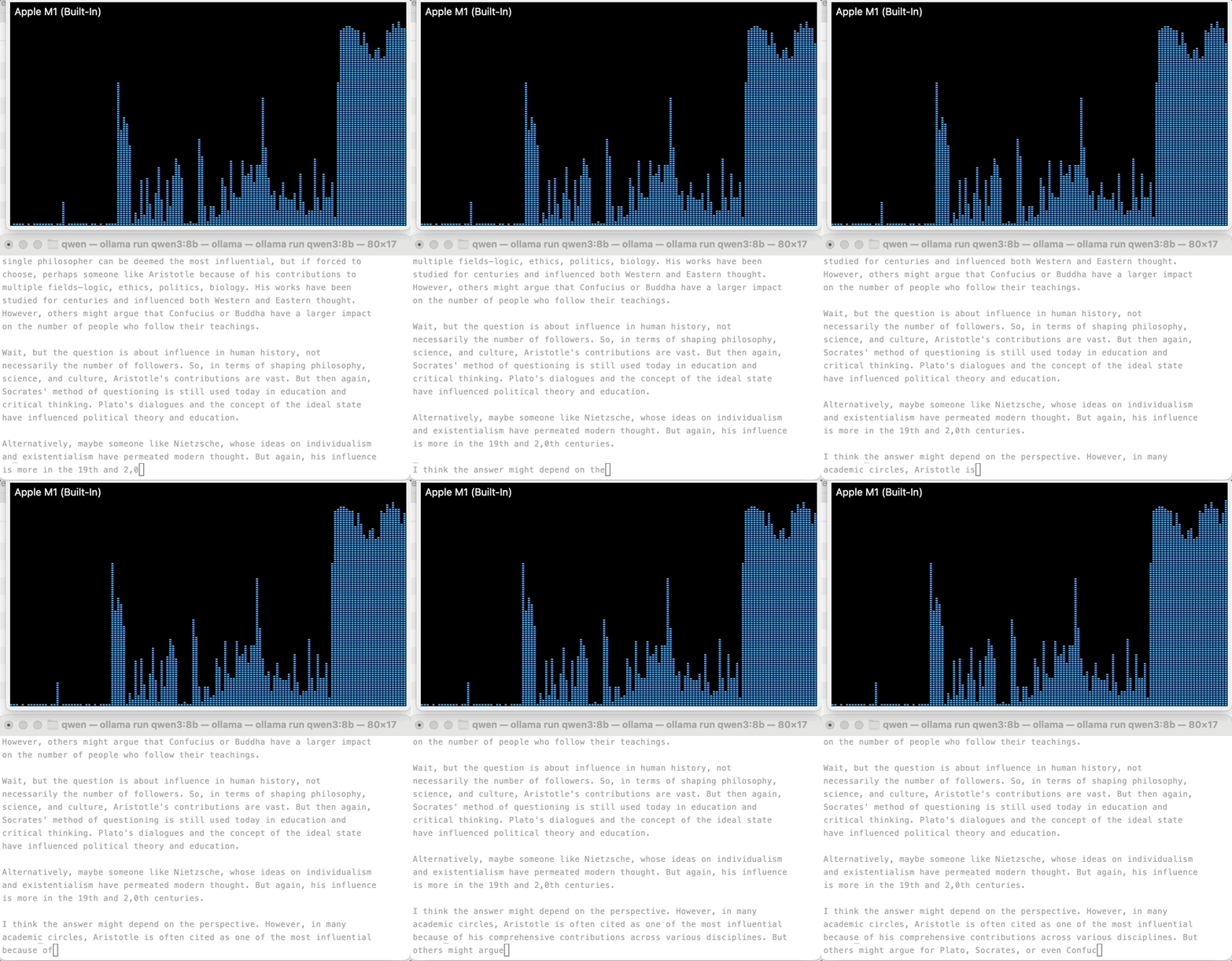
    The two windows above are 1. GPU history on the above and 2. a local model (Qwen3:8B) running locally in my terminal. The huge spike started when a question is asked and Qwen started to think about how to answer (the question was who was the most influential philosopher in human history?). 

    Now things start to make sense. A bigger model requires more powerful and ideally dedicated GPU with bigger RAM, both of which are expensive to individual consumers and companies the same. So even though theoretically I can use some powerful 1T parameter open source models like Kimi, I can never afford doing so, without Moonshot’s GPU clusters and teams of engineers. 

    The fourth dot: successful investing requires deep understanding of technology more so than ability to crunch numbers because the former provides a foundation for conviction.

    Being a professional manager in my day job, I’ve already believed the ability to understand how an organization – including its people and capital – works is the most important thing. However, this view is challenged more and more these days as I tinker with the models. The value of professional managers is deteriorating; we are essentially number crunchers without the domain knowledge of the main business (whatever that is). For example, a professional manager will unlikely be a great hospital administrator; such roles are almost always assumed by doctors because their knowledge of medicine and patient treatment is the foundation of administrative judgment. 

    On the other hand, I have come to terms with myself on the fact that whenever I get to hear on a rising stock, it is near the top. For example, with the current craze of AI and semiconductor stocks, I should not try to pick individual winners because whatever companies I know of, their growth has been achieved months ago. My chances of catching whatever growth that’s left should be with some targeted ETFs in the field, and ideally still a small portion of my portfolio should be allocated into it. 

  • How to File a Complaint with the CFPB (Step-by-Step Guide + Screenshots)

    How to File a Complaint with the CFPB (Step-by-Step Guide + Screenshots)

    Bank of America froze me out of my bank account a while ago due to some technicalities and now my account is in danger of being treated as abandoned property because it hadn’t been accessed for some time. Even though I have been calling their customer support consistently – which is outright useless and disrespectful most of the time – the problem persisted. Thanks to Reddit community r/BankofAmerica, I filed a report on Consumer Financial Protection Bureau (CFPB) and within one day, I heard back from Bank of America via email and a phone call. I don’t know if the problem can eventually be resolved, but I do want to document the process of filing the report online on CFPB so more people can know and understand how to do it. In the meantime, will just keep my fingers crossed!

    First, find the site – CFPB

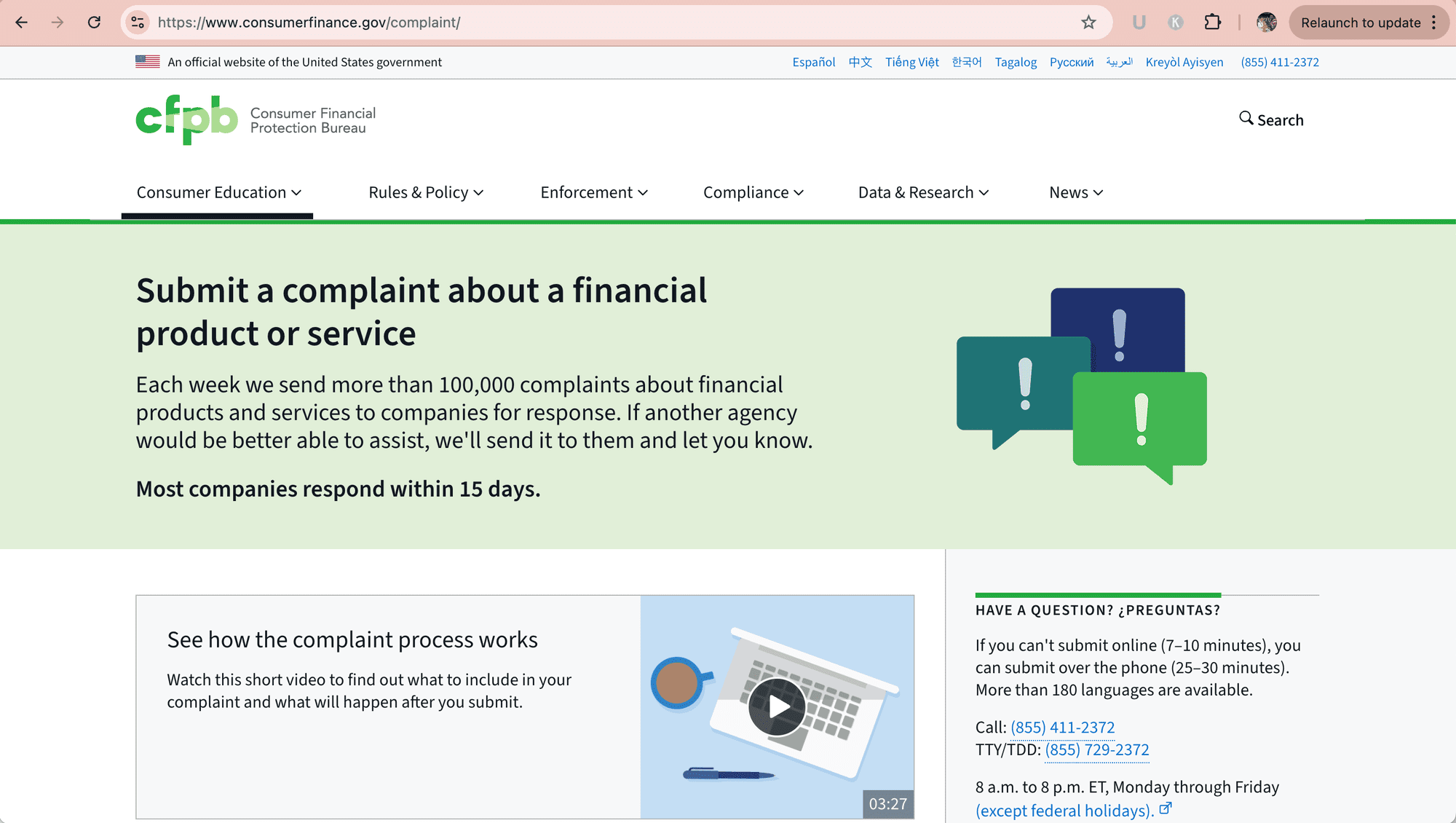
    CFPB is in charge of consumer financial protection (as its name suggests) and the first step is the locate the right website. You can Google CFPB or click the link here or use the link above to go to the sign up page directly. This is what the website looks like (and the “file a complaint” option is down when you scroll):

    cfpb official site: you can see it’s official coz “An official website of the United States government”

    Second, sign up

    Then there is the sign up process which doesn’t require too much info and is very straightforward. Then you go to the file process which has 5 steps to follow. Do notice that the site doesn’t really have a “save” option so it is better to prepare in advance and file the complaint in one sitting.

    Third, the actual filing steps

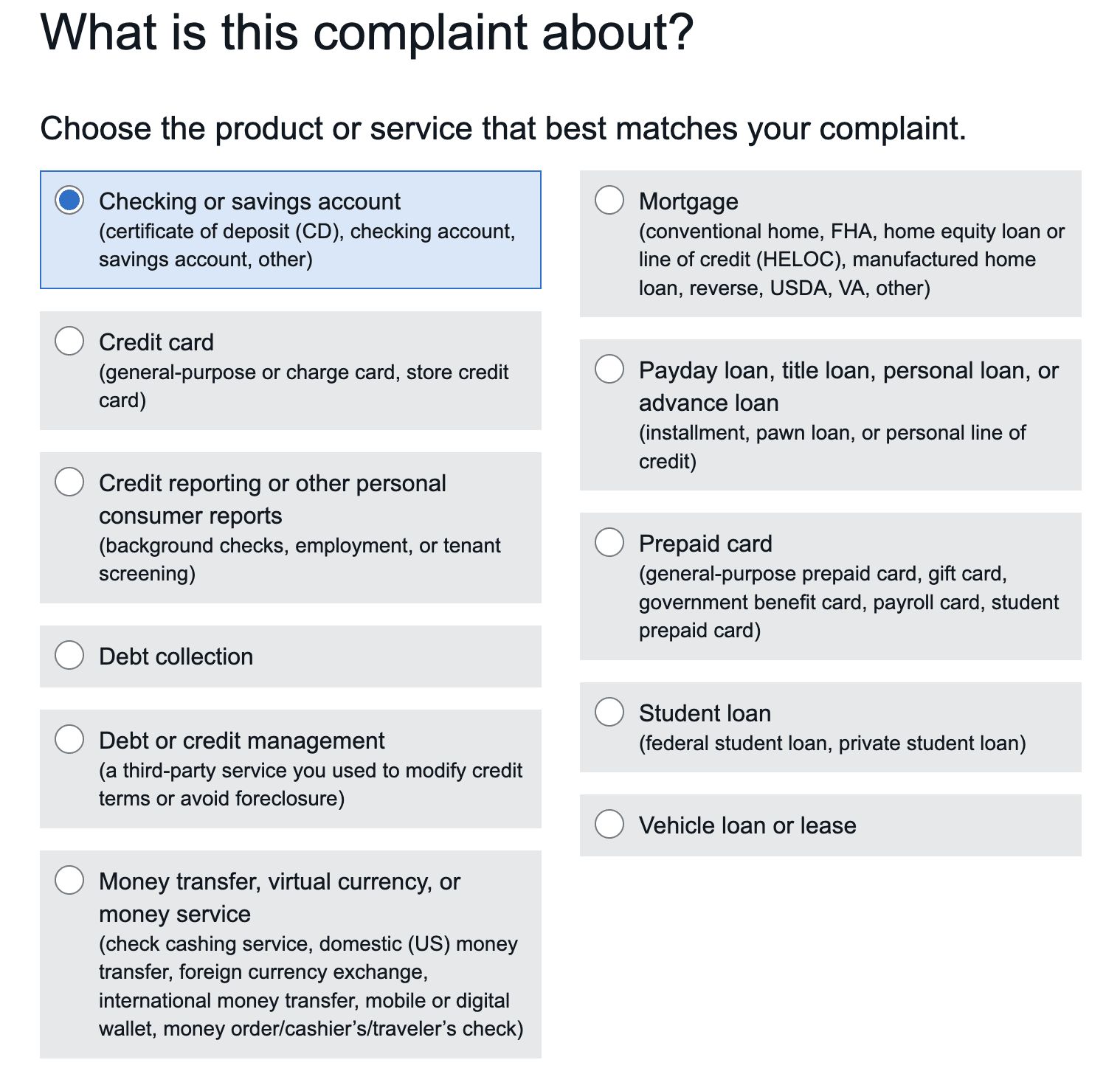
    Step 1: what is this complaint about?

    Then choose the product or service that best matches your complaint.

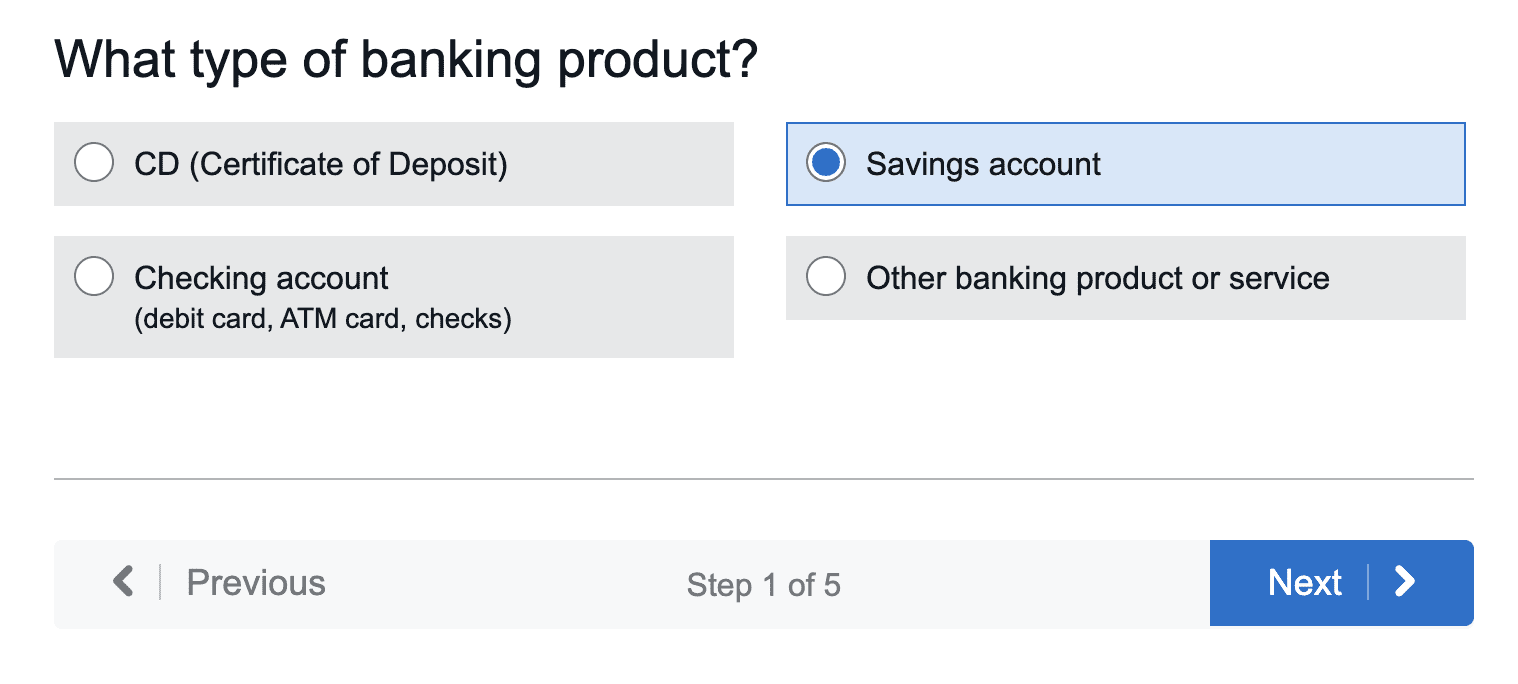
    After that, choose what type of banking product.

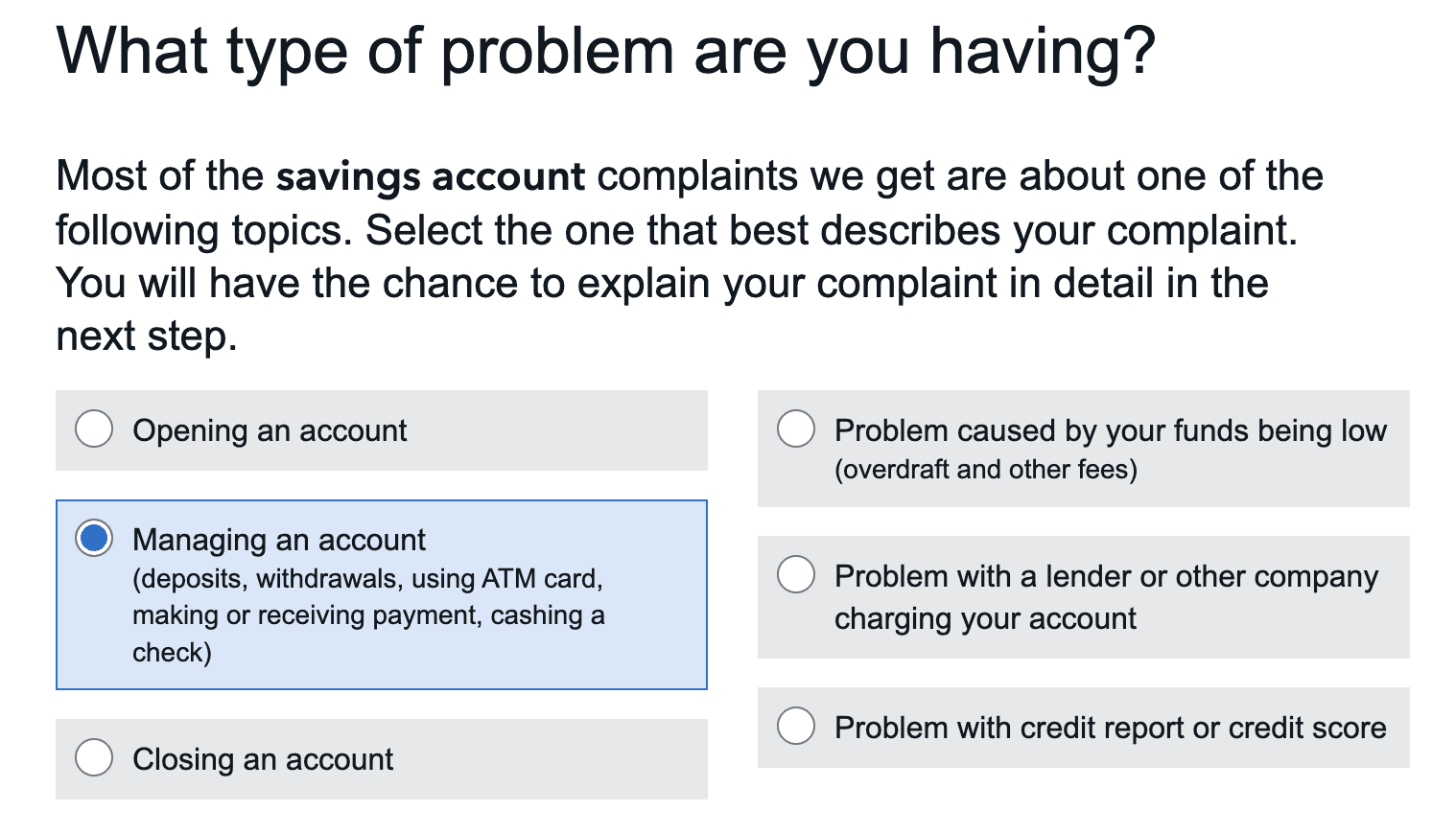
    Step 2: What type of problem are you having?

    Choose the topic that best fits your complaint.

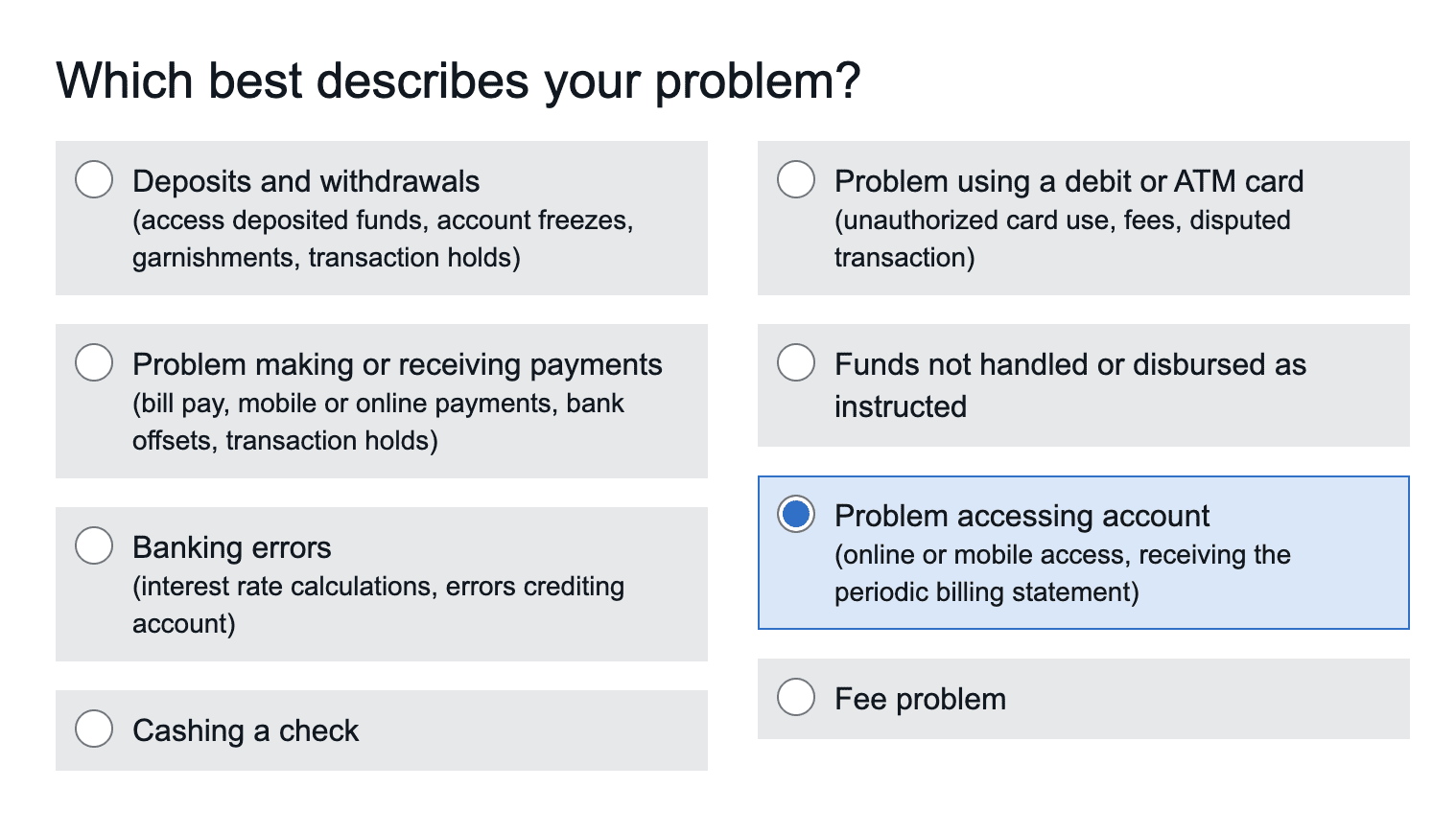
    Choose which option best describes your problem.

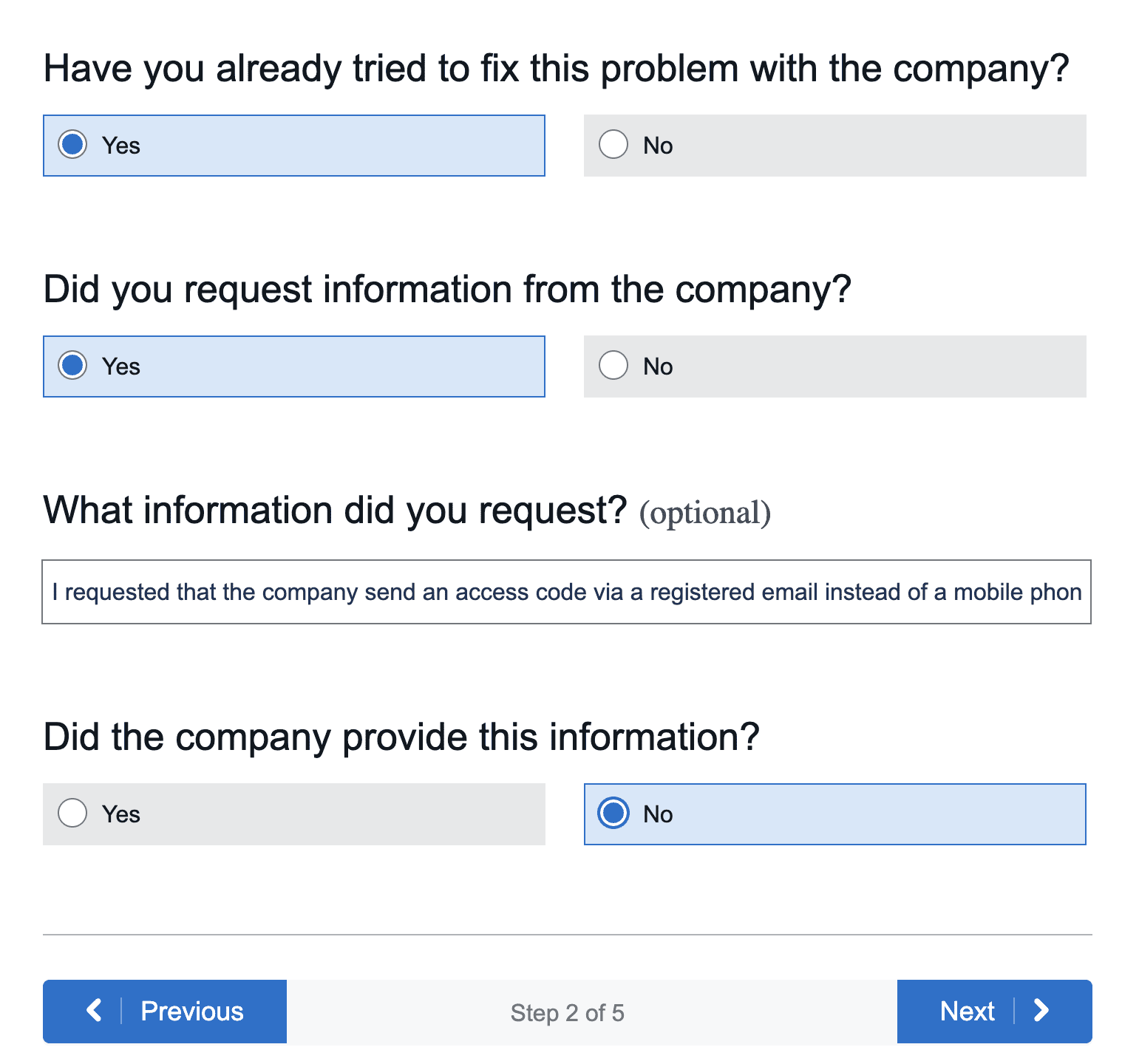
    Afterwards, choose actions you have already taken to make things happen (but obviously failed).

    Step 3: What happened?

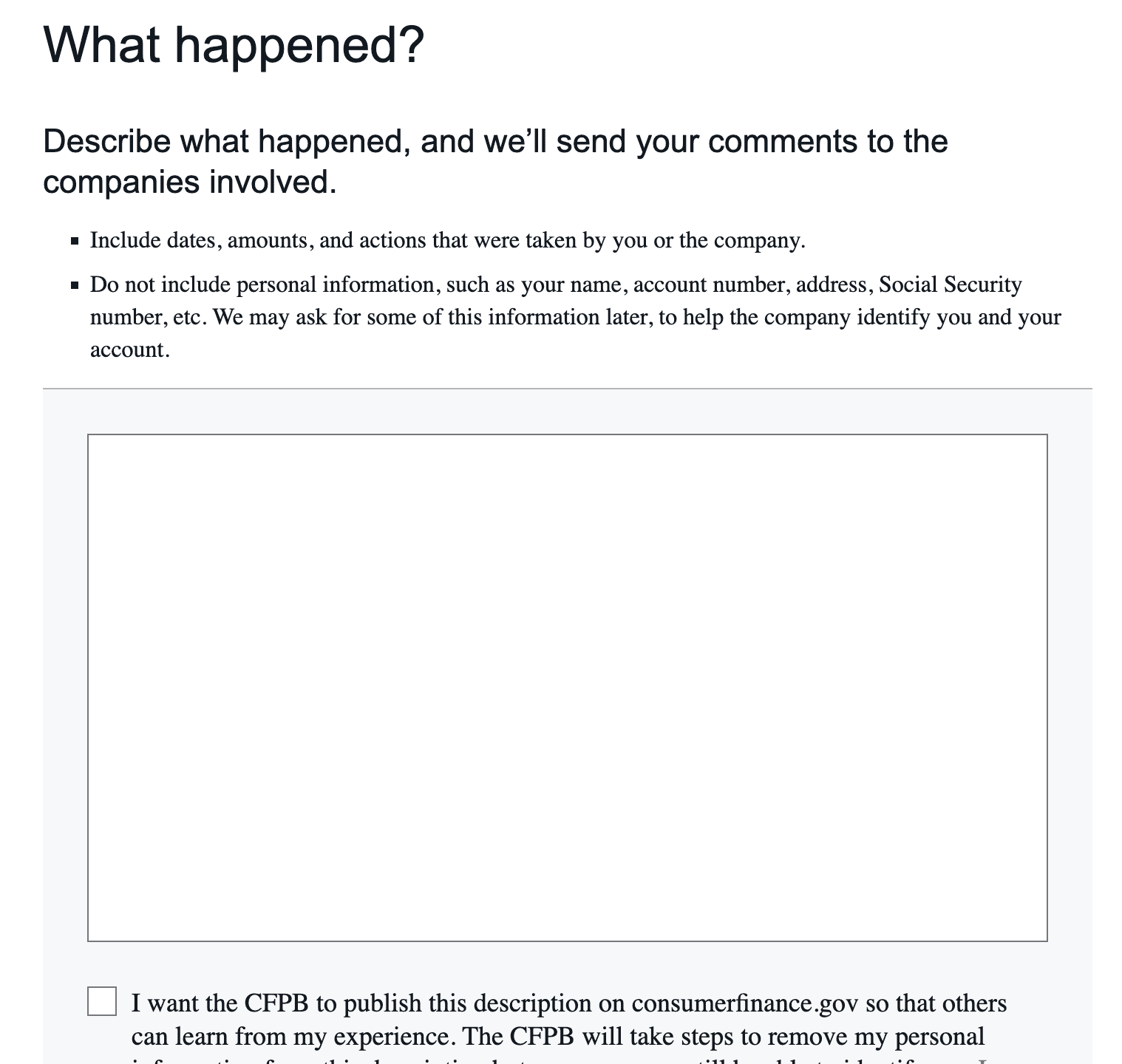
    First, describe what happened, and CFPB will send your comments to the companies involved.

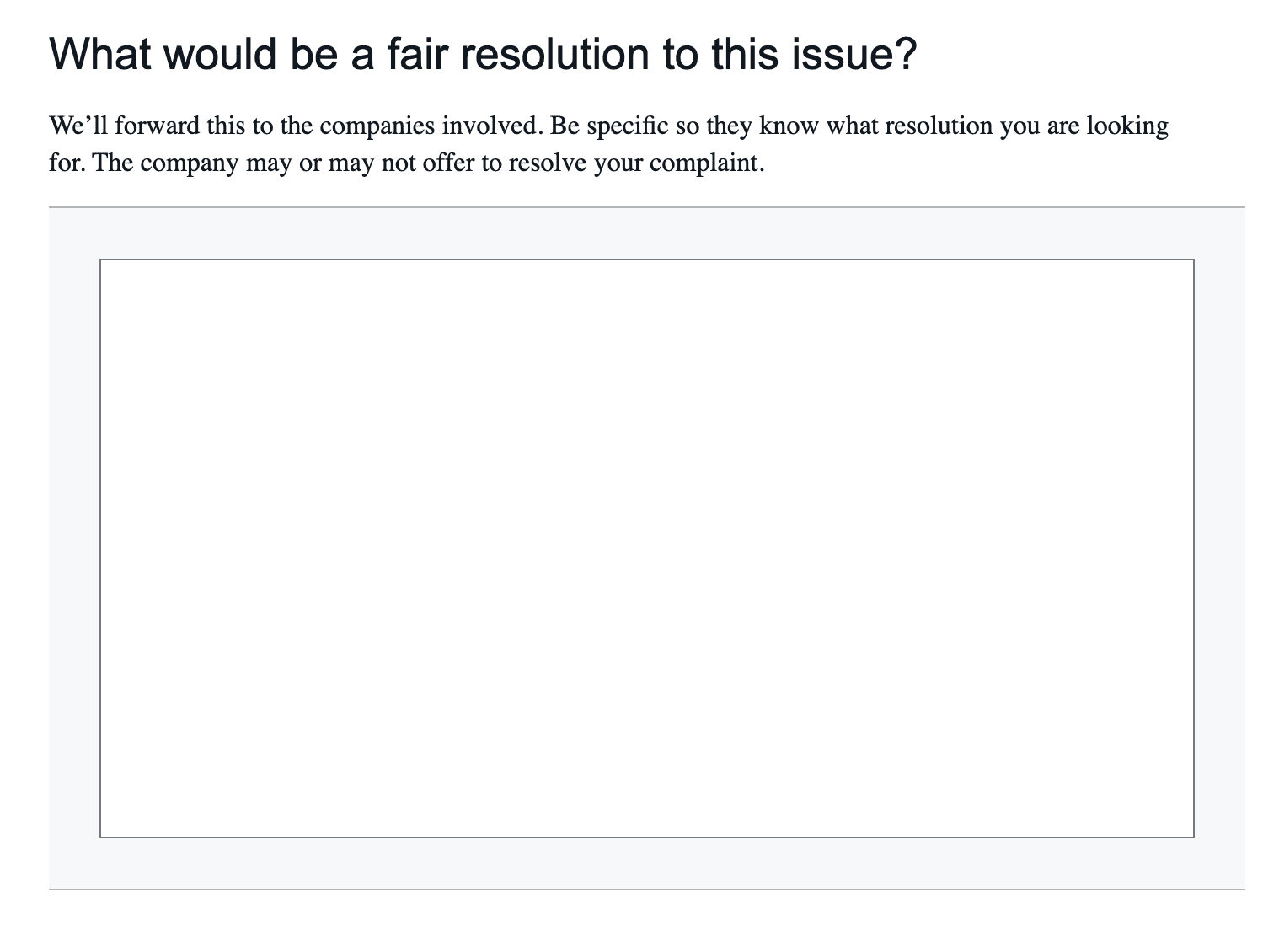
    Then you suggest a fair solution to the issue.

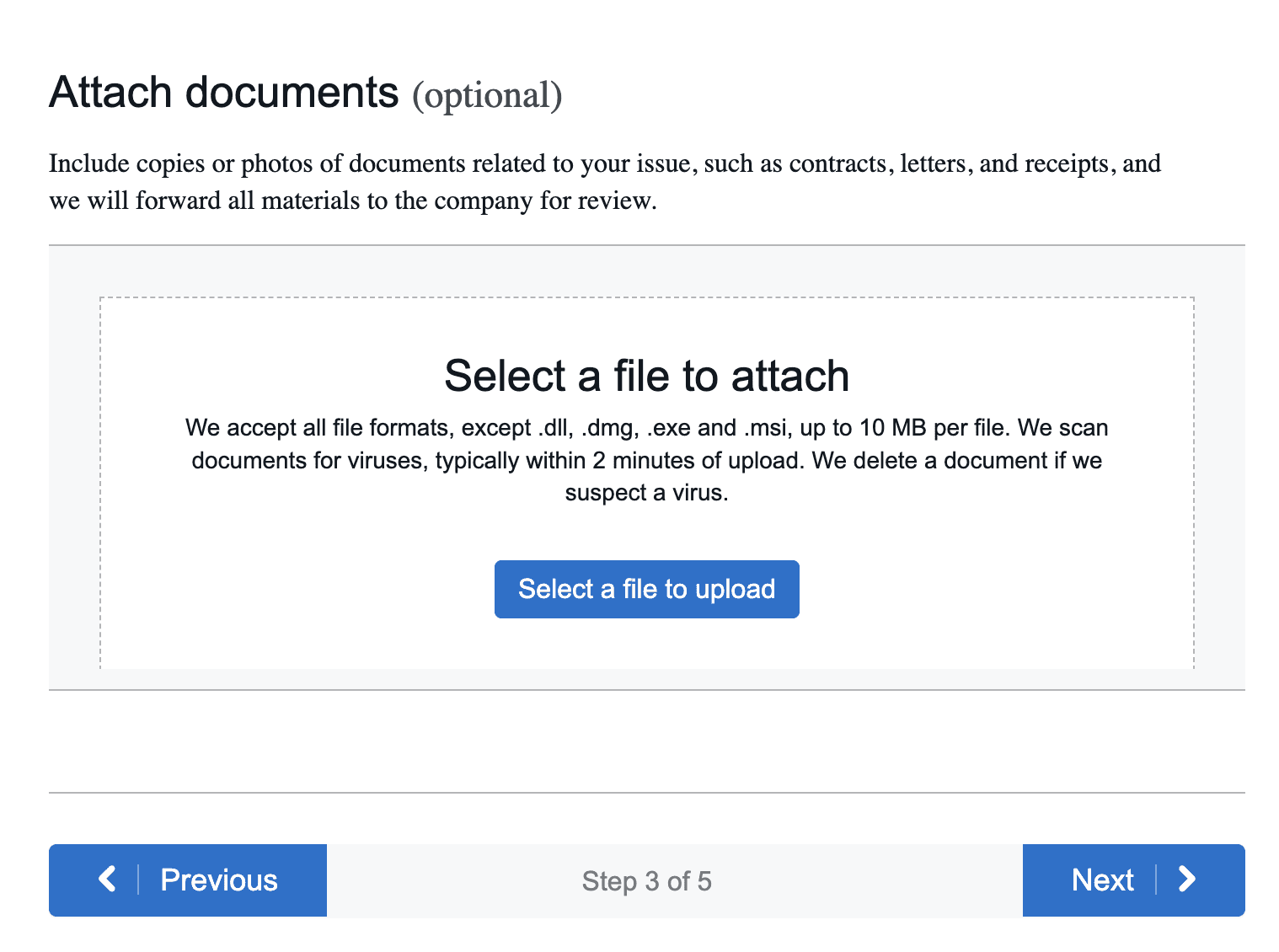
    Optionally, you can attach any document you think might help.

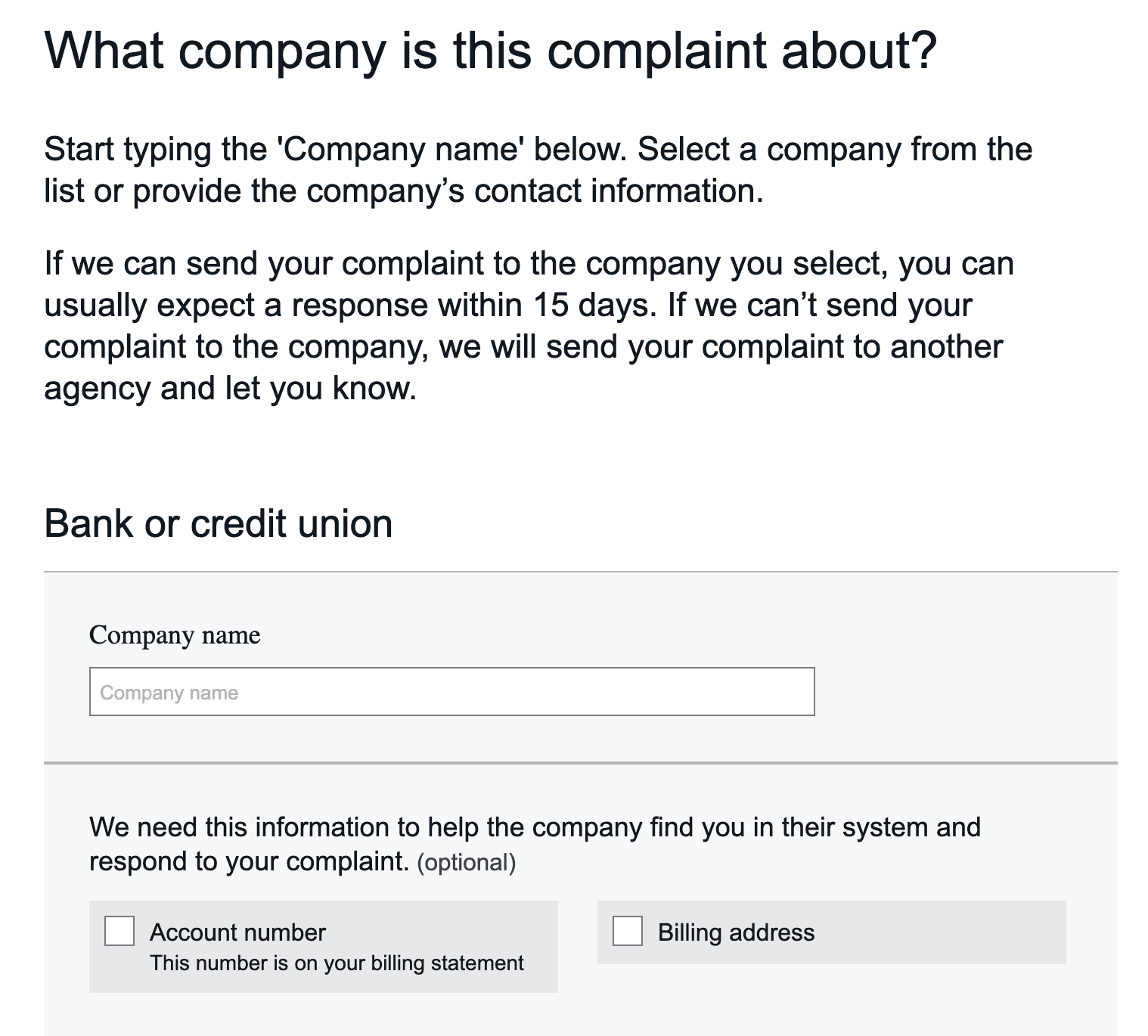
    Step 4: What company is this complaint about?

    Basic contact info. You don’t have to fill your demo info if you don’t want to since this is just helping CFPB better understand the people they are serving.

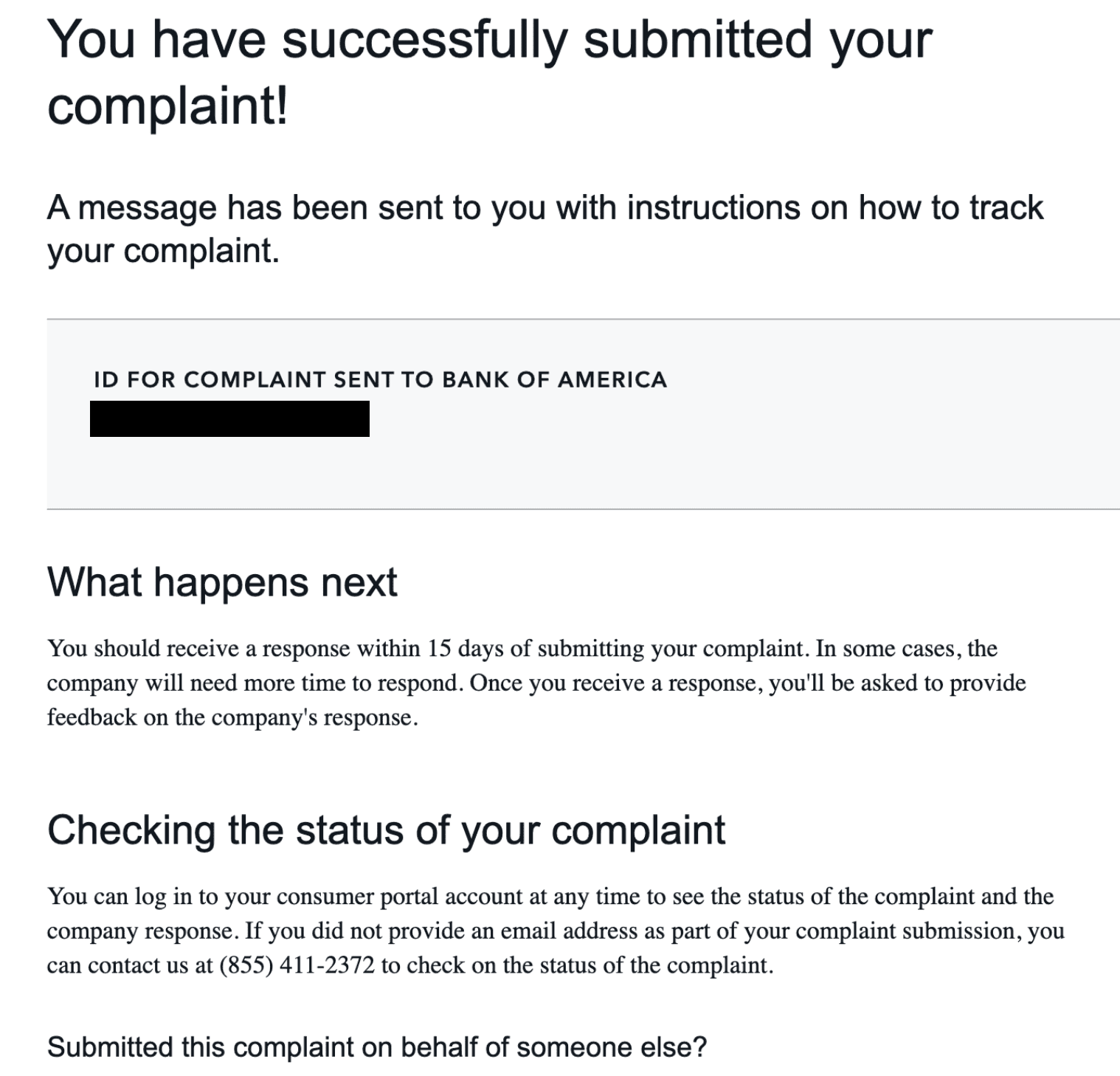
    After submission, you will get to this page:


    I don’t know why banks still function like this even when so much technology exists (and they still declare they care about tech advancement in their org!). Life is hard enough, and these large corporations are making it harder for the everyday people. Hope everybody can get out of the issues they are facing! And don’t loose faith! (follow me on X if you want for any reason @themichaelshoe.)

  • US Equity Market Structure (6): Instant Replay – Tracking an Order from Start to Finish

    This is the final post of a series on US Equity Market Structure (a total of 6).

    I didn’t write any of these posts; while I was learning the fundamentals about investment, I came across this series on Interactive Brokers’ IBKRCampus.

    (Disclosure: I’m using Interactive Brokers for my personal investing, but I’m not paid by them to write about it.)

    This series is mostly platform-agnostic, meaning that you don’t have to be on Interactive Brokers to find this series useful. Enjoy.


    Welcome back! In this final lesson of our introduction to U.S. equity market structure, we’ll put everything we’ve learned together and walk through the life cycle of a simple order from start to finish. Let’s follow what happens when you place an order to buy shares.

    The Order

    Let’s assume you want to buy 1,000 shares of General Electric (GE). The last sale price for GE was $10, and currently, the best bid (the highest price a buyer is willing to pay) is $9.99, while the best offer (the lowest price a seller is willing to accept) is $10.

    Your Broker

    You have a retail trading account with an online broker. This is where you go to enter your trade. Using your broker’s interface, you enter the following information:

    1. Order Type: You decide to place a limit order at $10. You are comfortable with paying $10, but you don’t want to pay more if the price rises.
    2. Instructions: You fill in the details, review the order, and hit transmit.

    Entering the Market

    Once your order enters the market, 500 shares are immediately filled at the midpoint price of $9.99 (due to hidden or non-displayed liquidity). This gives you an advantage, saving $2.50 compared to your original limit price of $10.

    For the remaining 500 shares, your electronic broker sends your order to the exchanges where the stock is quoted at $10. Fortunately, there’s enough available volume at this price, and the rest of your order is filled at $10.

    Final Execution

    In total, you bought 1,000 shares of GE. The total cost comes to $9,997.50, thanks to the price improvement on the first 500 shares. This was a successful execution because you paid less than your limit order anticipated.

    Other Options

    There are many other ways this trade could have played out depending on the order type and additional instructions you could have given. For example, if you were dealing with a larger order that would take more time to execute, you might have chosen an IEX D-Peg order. This order type adjusts the execution price based on market conditions, protecting you from trading when prices are unstable.

    These advanced features can help optimize your trading strategies, especially in high-speed environments.

    Conclusion

    And that’s the life cycle of a simple trade, from your initial idea to the final execution. Thanks for joining this course on U.S. equity market structure. If you’re curious about more advanced topics or want to dive deeper into trading strategies, don’t hesitate to reach out. Happy trading!

  • US Equity Market Structure (5): The Plays – Order Types and Algorithms

    This is the fifth post of a series on US Equity Market Structure (a total of 6).

    I didn’t write any of these posts; while I was learning the fundamentals about investment, I came across this series on Interactive Brokers’ IBKRCampus.

    (Disclosure: I’m using Interactive Brokers for my personal investing, but I’m not paid by them to write about it.)

    This series is mostly platform-agnostic, meaning that you don’t have to be on Interactive Brokers to find this series useful. Enjoy.


    Welcome back to our introduction to U.S. equity market structure. In the last lesson, we talked about the key players—broker-dealers and investors. Now, let’s explore what happens on the “field” of trading and how broker-dealers execute trades, either for themselves or on behalf of clients.

    Speed of Trading

    A critical component in today’s market is the speed of trading. Decades ago, the action on the New York Stock Exchange floor was the heartbeat of the market, but today, trading happens in nanoseconds. Stock prices can rise or fall in seconds, far too fast for humans to process. This high-speed trading is a result of technological advancements and fierce competition. The faster a trader can act, the more of an advantage they have, similar to being able to watch the game in slow motion while others are at normal speed.

    While this technological evolution has made markets more efficient—allowing prices to quickly reflect new information—it has also raised concerns about fairness. Speed can lead to an uneven playing field, where certain participants profit by trading based on minute price movements over very short time periods.

    Order Types

    When a broker-dealer is ready to trade, they must use order types—instructions that tell the trading venue how to execute the trade. Order types specify the conditions for buying or selling a stock. Some basic order types include:

    • Market Orders: These orders instruct the broker to buy or sell immediately at the current market price, prioritizing execution over price.
    • Limit Orders: These orders set a maximum (for buying) or minimum (for selling) price at which the trader is willing to execute. They are less aggressive than market orders since they wait for the price to reach a specific level.

    Beyond these, there are more complex order types. One example is pegged orders, which adjust their price relative to the prevailing market quote. A midpoint peg, for instance, will price itself halfway between the best bid and offer, while a near-touch peg will rest at the best bid (for buying) or best offer (for selling). Pegged orders are often hidden, meaning they don’t display their price to the market until they execute.

    There are also instructions that can modify orders, such as specifying the time of day when the order should be executed or setting a minimum number of shares that must be traded at once. These added details help broker-dealers and investors fine-tune their trades to fit specific strategies.

    Algorithmic Trading

    In today’s market, algorithmic trading plays a dominant role. Algorithms are pre-programmed sets of rules that automatically manage trades based on market conditions. For example, an algorithm designed to buy 10,000 shares of Apple will determine how to split the order, which order types to use, and how to react to changes in the market—all without human intervention.

    Algorithms enable trades to happen incredibly quickly, reacting to new market conditions in real time. Just as a sports team follows a defensive strategy without needing to stop and consult the coach, these algorithms follow pre-set rules that allow them to adapt instantly to market movements.

    There are many types of trading algorithms, each designed with different goals in mind. Some algorithms aim to minimize market impact, while others are programmed to execute trades at the Volume Weighted Average Price (VWAP) or seek liquidity in dark pools (private trading venues that don’t display order book data). These strategies, like the zone defense in basketball, are built to respond automatically to market changes.

    Conclusion

    In this lesson, we’ve covered the mechanics of modern trading, from order types to the algorithms that have revolutionized the speed and efficiency of the market. In the next and final lesson, we’ll follow a simple trade from the moment it’s placed to its final execution, tracing the full journey of an order through the U.S. equity market system.

  • US Equity Market Structure (4): The Players – Broker-Dealers and Investors

    This is the fourth post of a series on US Equity Market Structure (a total of 6).

    I didn’t write any of these posts; while I was learning the fundamentals about investment, I came across this series on Interactive Brokers’ IBKRCampus.

    (Disclosure: I’m using Interactive Brokers for my personal investing, but I’m not paid by them to write about it.)

    This series is mostly platform-agnostic, meaning that you don’t have to be on Interactive Brokers to find this series useful. Enjoy.


    Welcome back to our introduction to U.S. equity market structure. Now that we’ve discussed the rules of the game, the playing field, and the “ball” (the stocks), let’s dive into how trading really happens by focusing on the key players: broker-dealers and investors.

    Investors

    Investors are the ultimate stakeholders in the market—the ones the SEC is designed to protect. Investors provide the capital that companies use to grow and fuel the economy. They can be individual investors, like people buying stocks or contributing to a 401(k), or institutional investors, like asset managers handling pension funds or mutual funds on behalf of individuals.

    If you invest in a company or have a retirement account, you’re considered an investor. Approximately half of Americans are invested in the stock market in some form. Investors play a key role by researching companies, making decisions on whether to buy or sell, and holding stocks whose value fluctuates with market performance.

    While investors are central to the market, they often can’t execute trades directly. When you place a trade on your brokerage account, you’re not submitting that order directly to the exchange. Instead, you rely on a registered broker-dealer to execute the trade on your behalf.

    Broker-Dealers

    In many ways, broker-dealers are the actual “players” on the field. These firms are licensed to buy and sell securities, playing both the role of agent (when trading on behalf of clients) and principal (when trading for their own account). Broker-dealers provide the crucial bridge between investors and the stock exchanges.

    • Broker (or agency broker) refers to firms or individuals that execute trades for clients.
    • Dealer (or principal trader) refers to those who trade on their own account.
    • Prime brokerage is a term for brokers that offer additional services like securities lending, leveraged trade executions, and cash management, which large investors often require.
    • Proprietary traders trade mostly for their own accounts, and they tend to have more flexibility because they don’t handle client orders. High-frequency traders (HFTs) are often proprietary traders.
    • Retail broker-dealers serve individual investors, helping them buy and sell stocks.

    Responsibilities of Brokers

    Brokers have certain responsibilities to their clients, particularly regarding “best execution” and “order routing.”

    1. Best Execution
      Brokers are legally required to seek the best execution for their clients’ orders. This means they must strive to achieve the best price reasonably available at the time of the trade. At a minimum, this means they can’t execute an order at a price worse than what’s being displayed in the market elsewhere. However, brokers are also encouraged to seek “price improvement,” aiming for a price better than the current market quote if possible.
    2. Order Routing
      When you place a trade, brokers must decide where to send your order for execution. This is called order routing. If you don’t specify where to route your trade, brokers have discretion over the decision. According to Rule 606 of Regulation NMS, brokers must report where they send orders that don’t have specific instructions. You can find these reports online by searching for a broker’s “606 report.”

    Brokers balance different priorities depending on whether they represent themselves or their clients. The strategies and tactics they use will vary based on the instructions or goals of their clients.

    In the next lesson, we’ll explore the strategies and tactics that broker-dealers use when trading in the U.S. equity market.