If you have read my last post, you know that our fictional company has been created, and has procured land usage right and fixed assets such as manufacturing plant, equipment, etc. Now the company is ready to produce.
In this episode, we will keep following the economic activities and learn how they affect our balance sheet.
Raw Material Procurement
The first thing I want to do is to purchase raw materials. By negotiating with a supplier, I made a deal to purchase 24 million dollars of raw materials, and would need to pay 16 million dollars for the time being. The supplier agreed to give me a few months for the other 8 million dollars.
Raw materials belong to inventory, so I’ve accrued 24 million dollar worth of inventory under assets. I’ve paid out 16 million dollars of cash, so my cash position is reduced by 16 million, to 8.5 million dollars. I also owe the supplier 8 million dollars of accounts payable, which is a type of current liability.
After this economic activity we can see that our assets are increased by 8 million dollars, and our liabilities are also increased by 8 million dollars. The basic formula that assets equal liabilities plus shareholders’ equity is still followed.
Manufacturing Process
The raw materials will not produce products themselves. Instead, we need people to operate our equipment to manufacture those raw materials into finished products. To make it happen, our company paid another 12 million dollars in cash for the employee wages, water and electricity costs, etc. During the manufacturing process, our inventory – 24 million worth of raw materials – is also reduced to zero, assuming that we’ve used up all of them. The total cost of producing our products – 36 million dollars – will be recorded as finished goods, which are a type of inventory. Thus, our inventory actually increases from 24 million to 36 million dollars.
Raw materials, products in progress, and finished goods all belong to INVENTORY.
(You may have also noticed that we actually don’t have 12 million dollars of cash to spend on employee wages, water, and electrcity. Let’s imagine that we’ve struck a deal with the power company, which grants us another six-month relief for the 4 million dollar worth of electricity bills.)
After this, we’ve accrued an additional 4 million dollars of accounts payable, and cash is reduced to 500,000 dollars. Our inventory, as mentioned before, increases from 24 million to 36 million dollars.
The 36 million, including 12 million labor and utility costs, and 24 million raw material costs, are the manufacturing costs for our products. Intuitively, you may think of recording costs in the Income Statement. However, it is actually recorded under Assets as inventory.
What is the deal with that?
Well, if you recall in Income Statement, the item directly underneath Revenue is cost of goods sold. When we sell our products and obtain revenue, we automatically lose ownership of the inventory. In other words, we should only record the portion of finished products SOLD here. We can spend all the money on raw materials or on manufacturing, but if none of the products are sold, they don’t appear as cost of goods sold in Income Statement.
💡
Cost of goods sold is a subset of manufacturing cost. It represents ONLY the portion of manufacturing cost that’s already SOLD.
After we make a sale, our inventory actually decreases, because our finished goods decrease. We either increase our cash position or accounts receivable position, and should be able to increase our assets because of the sale.
Now if someone says that he could increase gross profit by just increasing manufacturing without increasing sales, would you believe that? We will analyze this case in the next episode.
Sharing my learnings about the core skills on how to run life like a company in the Me Inc. Newsletter. Topics covered: Copywriting, Finance, Technology, and Productivity. Read my why here or join directly👇. No spams. Ever. – Michael
Welcome to the Me Inc. Newsletter.
Build yourself into a business, before you start one.
Learn. Grow. Build. Now.
function ml_webform_success_14362251() { var $ = ml_jQuery || jQuery; $(‘.ml-subscribe-form-14362251 .row-success’).show(); $(‘.ml-subscribe-form-14362251 .row-form’).hide(); } fetch(“https://assets.mailerlite.com/jsonp/918262/forms/119753320103413631/takel”)
As an entrepreneur, it is NOT our job to prepare the book, i.e. the financial statement. We can always outsource the job to an accountant.
However, what we cannot outsource is how to deal with the numbers given back by the accountant. Will you be able to make the right call when allocating resources based on your judgment?
To improve our judgment in resource allocation, building a financial mindset will be crucial. Once you get it, you will understand how economic activities affect financial statements, but furthermore, you will understand how different factors play their roles in value creation for a company. In other words, once you get the financial mindset, you can use finance as a language to understand how values are created in operating a company.
In this episode, we will discuss the preparation of financial statements in order to help us understand how economic activities affect financial statements.
Let’s start from the beginning of a company’s life cycle – the creation of a business.
Before Creation
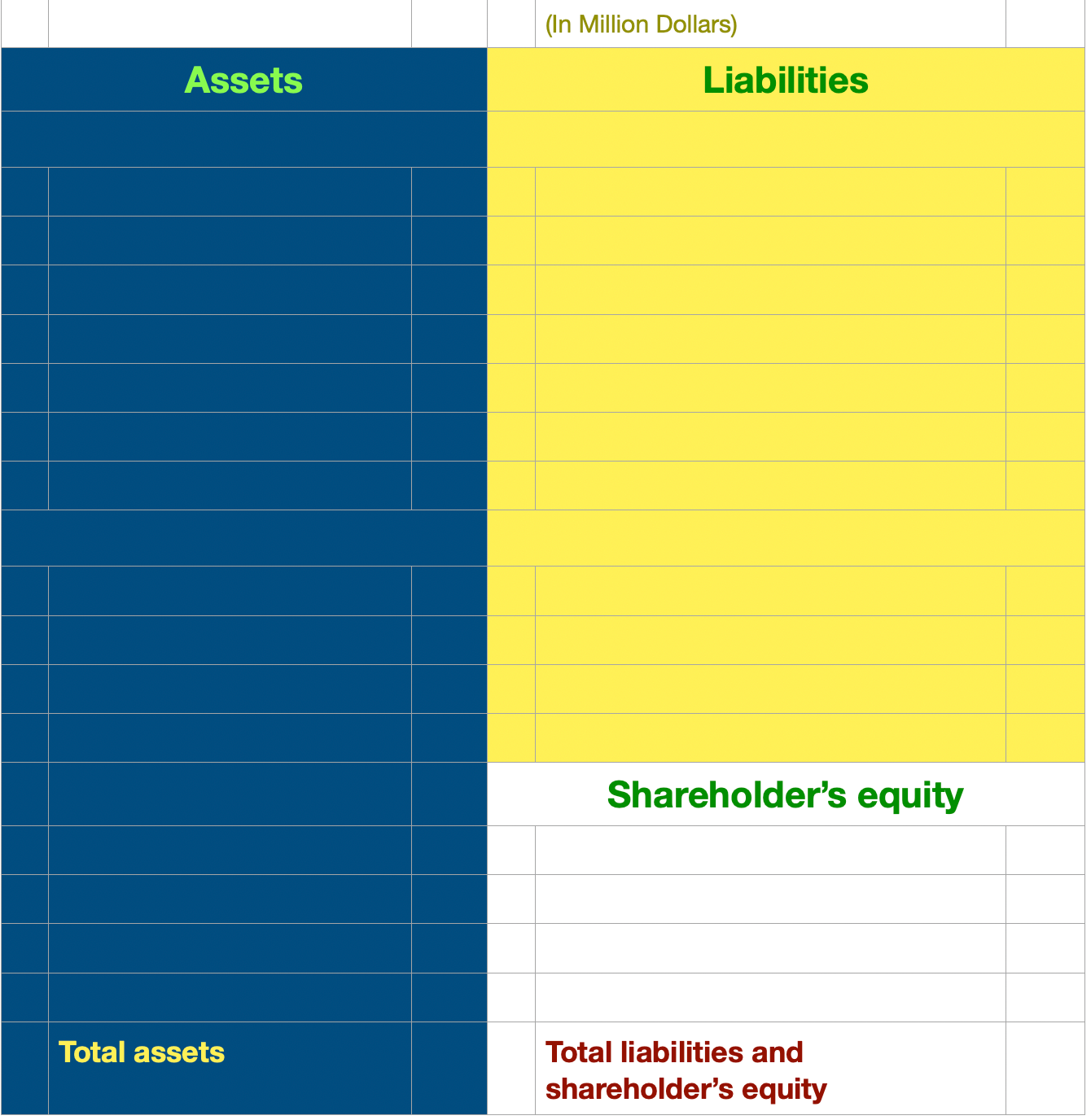
Before we invest any money into the new company, the balance sheet is blank. There is no asset, no liability, and no shareholder’s equity.
Capital Injection
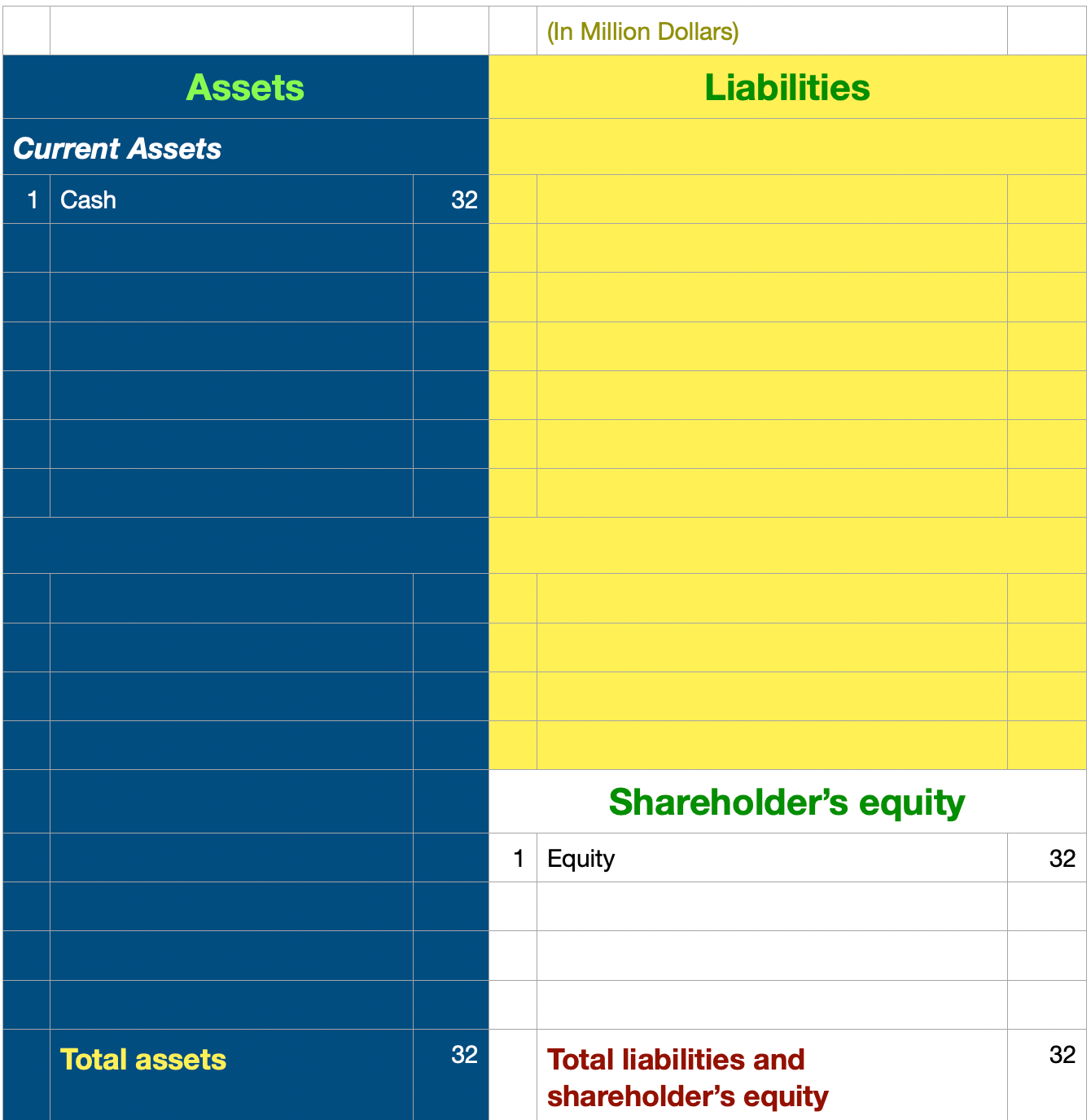
As the sole shareholder of the company, I’ve decided to inject 32 million dollars. At this point, the company has only one thing on the balance sheet – money. On the balance sheet, 32 million dollars worth of cash will be recorded under Assets. At the same time, 32 million dollars worth of equity will also be recorded under Shareholder’s Equity, balancing the financial statement.
At this point, there are only two items on the balance sheet, cash and equity, with the exact same value. The fundamental logic – assets = liability + shareholder’s equity – still applies.
Getting a Loan
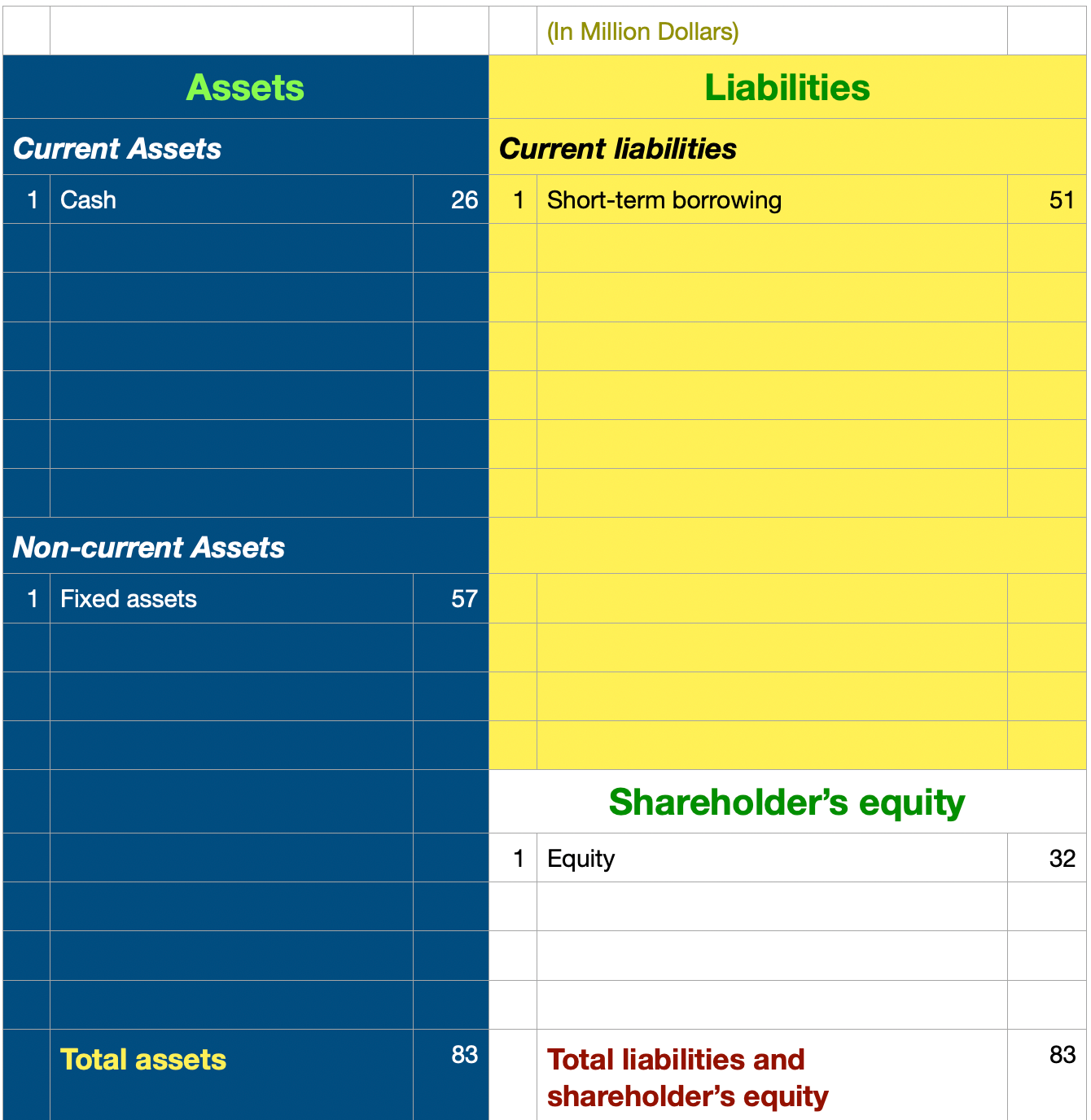
After my initial capital injection, I’ve decided to take out a loan from the bank. The bank, generously, has granted a total 51 million dollars, and wired the total amount directly to the company’s bank account. All of a sudden, the total cash amount is increased to 83 million dollars.
Because the money is borrowed from the bank, there should be a 51 million dollar worth of liability under short-term borrowing, assuming that it is a 12-month loan.
After this, there are three items on the balance sheet by now, i.e. cash, short-term borrowing, and equity. The basic logic still applies.
Fixed Assets Procurement
By now, all capital is in place for the company. The company then gets ready for doing business, and the first thing is to purchase some fixed assets (assuming it’s in an asset-heavy industry such as manufacturing). The company then spends 57 million dollars on building a manufacturing plant, equipment and office furniture procurement, etc.
Our cash is then reduced by 57 million dollars, to 26 million dollars. At the same time, we’ve gained 57 million dollar worth of fixed asset.
The total of assets is still the same – 83 million dollars – but the percentage of each is changed.
Land Usage Right Purchase
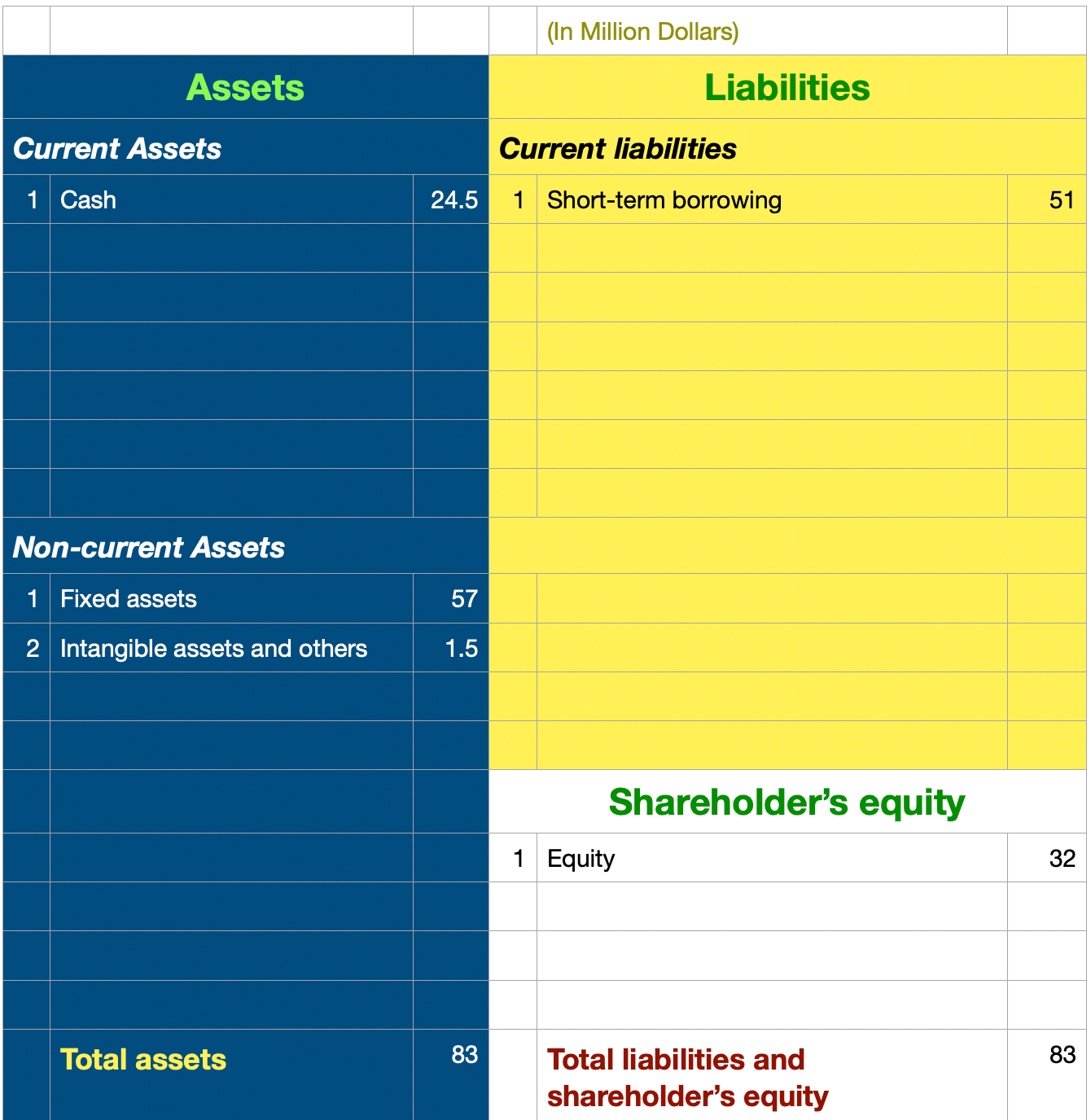
The company also purchase a land usage right from the government for 1.5 million dollars, and because land usage right is an intangible asset, we will deduct the cash amount from our cash item, and put 1.5 million dollars under intangible assets.
Similar to the previous economic activity, the asset total is still unchanged, but our percentage of cash is once again reduced.
By now, the company has made all the necessary investments in infrastructure. Next it will start manufacturing, which will further change our financial statements. We will continue our learning in the next episodes.
Sharing my learnings about the core skills on how to run life like a company in the Me Inc. Newsletter. Topics covered: Copywriting, Finance, Technology, and Productivity. Read my why here or join directly👇. No spams. Ever. – Michael
Welcome to the Me Inc. Newsletter.
Build yourself into a business, before you start one.
Learn. Grow. Build. Now.
function ml_webform_success_14362251() { var $ = ml_jQuery || jQuery; $(‘.ml-subscribe-form-14362251 .row-success’).show(); $(‘.ml-subscribe-form-14362251 .row-form’).hide(); } fetch(“https://assets.mailerlite.com/jsonp/918262/forms/119753320103413631/takel”)
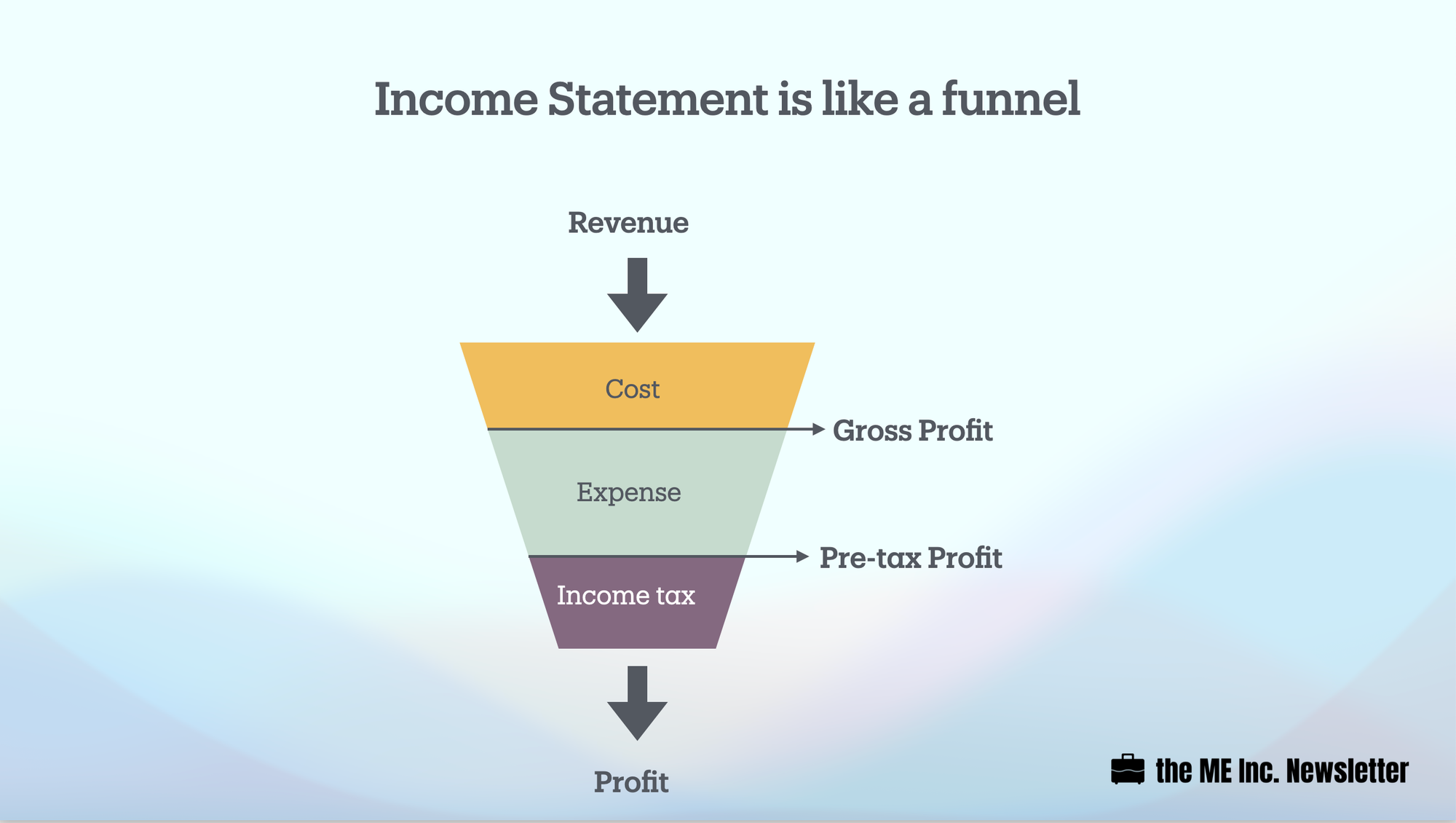
You put revenue in from the top of the funnel, and profit comes out from the bottom. In between the top and the bottom, costs and expenses will be taken out.
The sequence of taking out the costs and expenses is also pretty straightforward. First of all, we deduct the cost of goods sold from the revenue, the cost that is directly related to doing the sales. Doing so will gives us our gross profit. Then we need to subtract all kinds of expenses, some of which are related to doing the sales, and some to managing the company.
On the balance sheet, the fundamental logic is “asset equals liability plus equity”.
What is the fundamental logic on the income statement?
Well it is actually quite simple: when we subtract all the costs and expenses from revenue, what’s left is profit.
What information does the income statement tell us?
First, by looking at the net profit, we can conclude whether the company is profitable in the past fiscal year. If net profit is positive, the company is profitable; if net profit is negative, the company is not profitable.
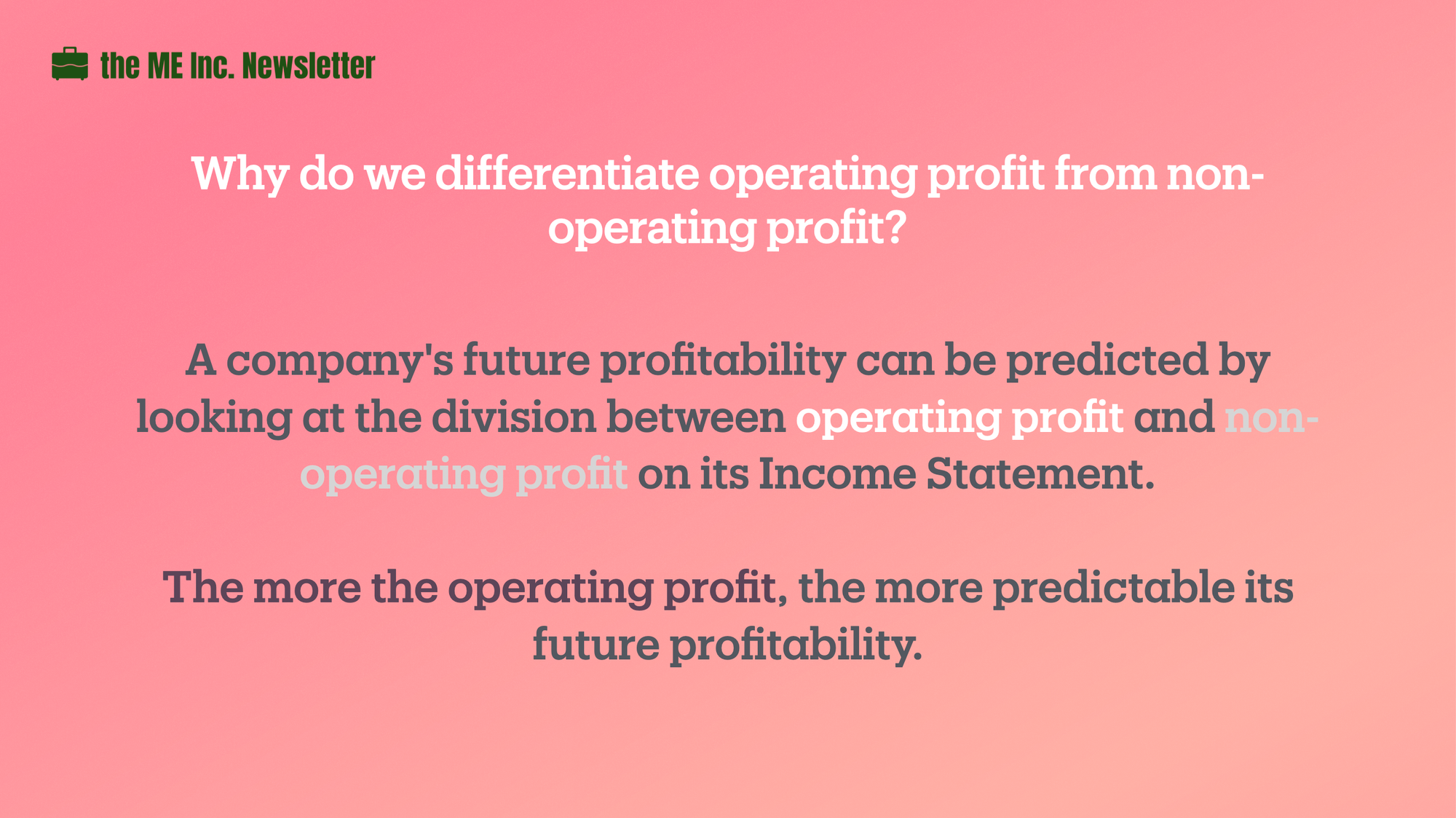
But because income statement lists the company’s operating profit separately from its non-operating profit, we can, to an extent, conclude how predictable the company’s future profitability is.
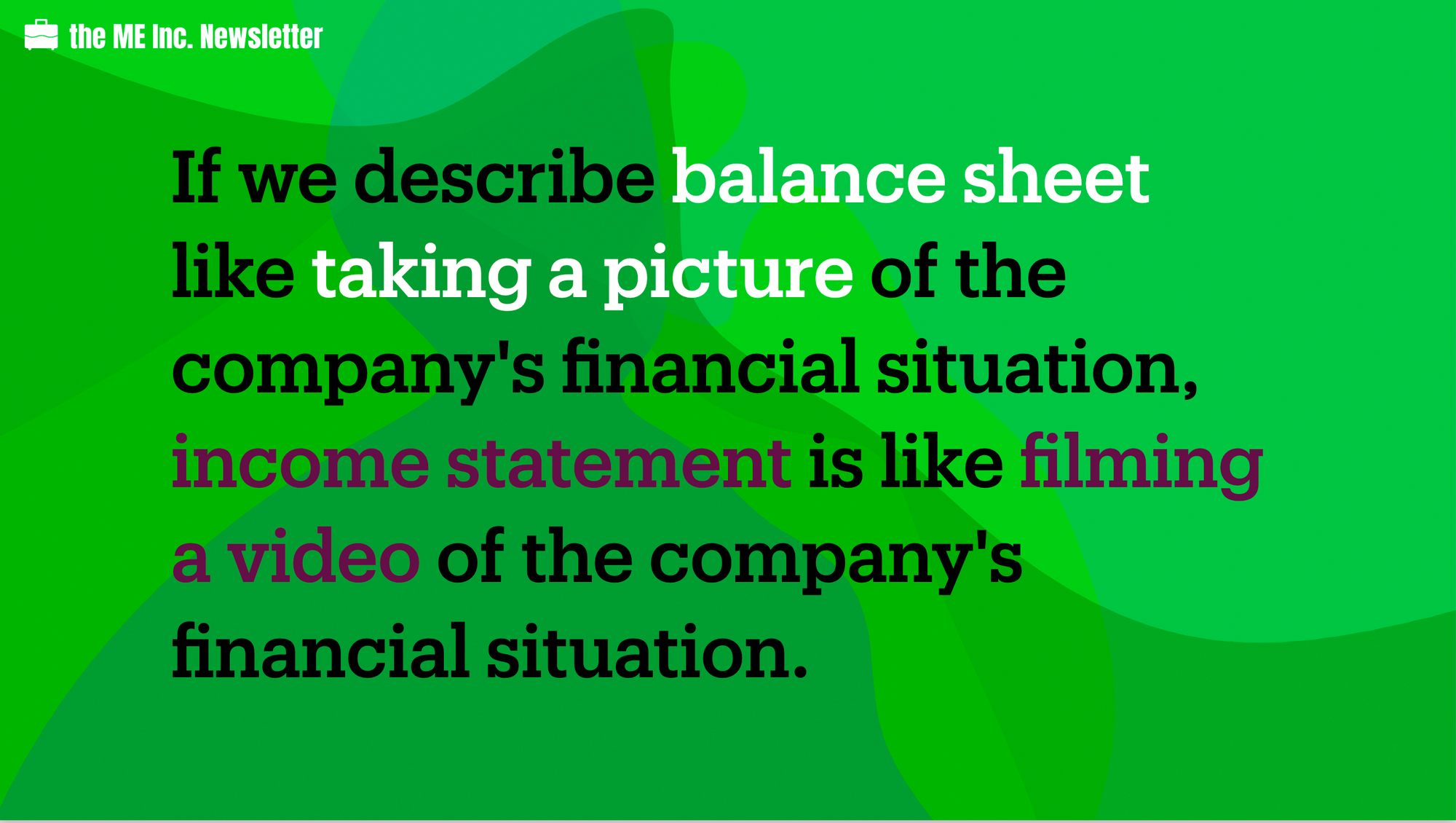
Balance sheet shows a company’s asset, liability and equity values at a certain time point. Different from the balance sheet, everything on the income statement is by a period. If we describe balance sheet like taking a picture of the company’s financial situation, income statement is like filming a video for the company’s financial situation.
Does revenue equal cash received?
There is still one important concept to clarify: does revenue equal cash received?
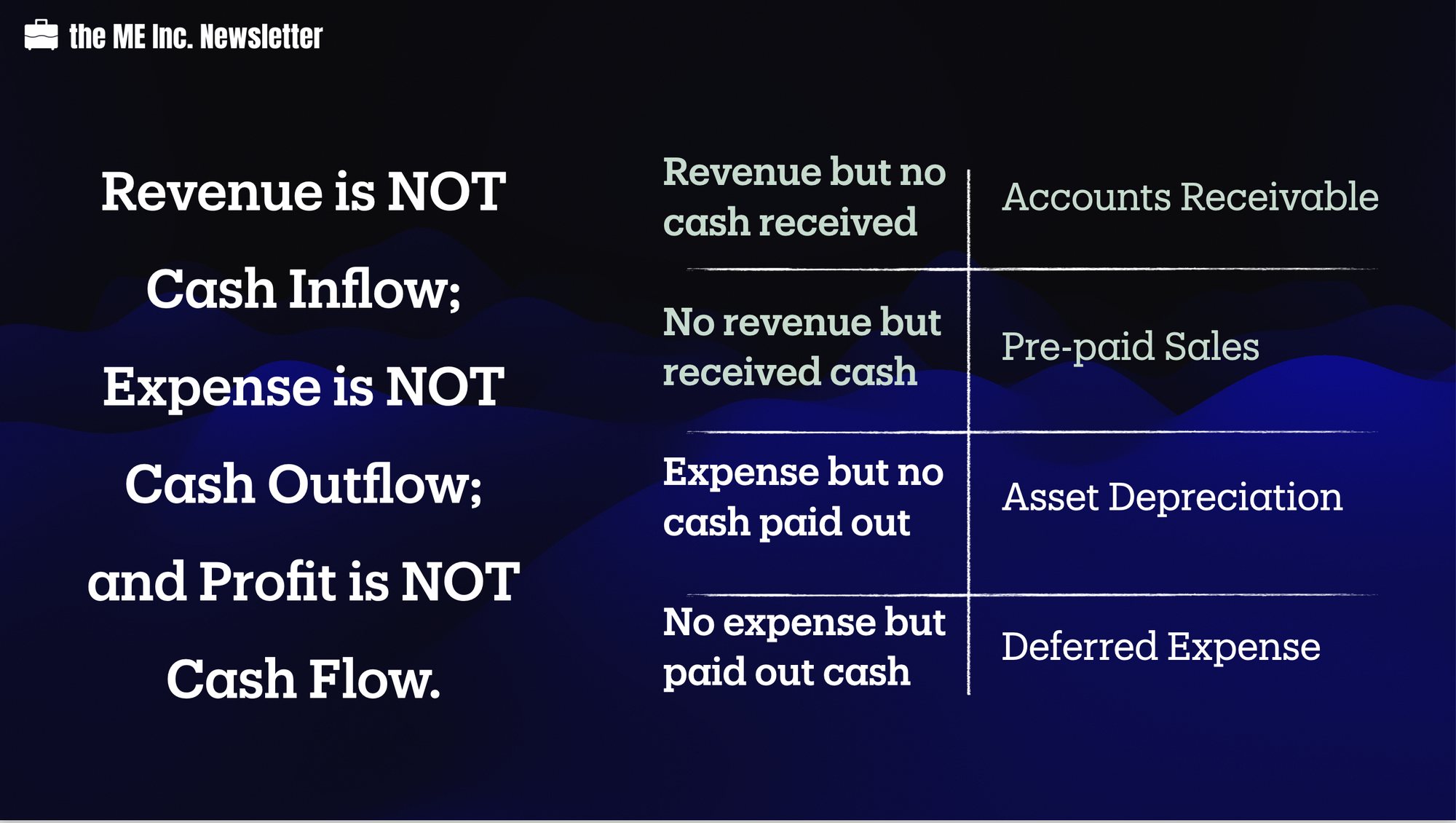
The answer is NO. Revenue does not equal cash received. And Expense/cost does not equal cash paid out.
First, let’s look at the first statement – Revenue does not equal cash received.
Under what circumstance will we have revenue but do not receive cash? Well, you may have guessed it – when we make a sale on accounts receivable. Even though we have sold our product and got the revenue, we will NOT actually see any cash until the accounts receivable is collected.
On a second note, the reverse is also true: cash received does not equal revenue.
One possible situation is when we get pre-paid sales. We’ve sold the product but have not delivered yet, but have already received the money.
After that let’s look at the second statement – Expense/cost does not equal cash paid out.
Under what circumstance will we have an expense but have not paid out cash?
One common example is asset depreciation. Depreciation is used to describe the decrease in value of fixed assets. When calculating depreciation, we don’t need to pay cash to anybody, and it only shows on the books. We have to record such depreciation as an expense on the income statement, but we actually don’t need to pay cash to anybody.
On the contrary, when do we have cash outflow but no expense?
When we pay a large sum of money for an asset that’s for the future operations of the company all at once, that lump sum should NOT be accounted as expense for that period alone. Instead, if we think the asset can be used for a certain period, a portion of the total cost should be accounted each year. We’ve already visited this concept before in the balance sheet episode, and it is called deferred expense.
Relationship between balance sheet and income statement
Although individually, balance sheet and income statement have already provided us with lots of information on a company’s financial performance, the combination can often reveal insights that far exceed an individual statement does.
Let’s say if a company makes a net profit of 5.2 million dollars this year, and has decided to distribute 1 million in dividends to shareholders. The remaining profit is 4.2 million dollars.
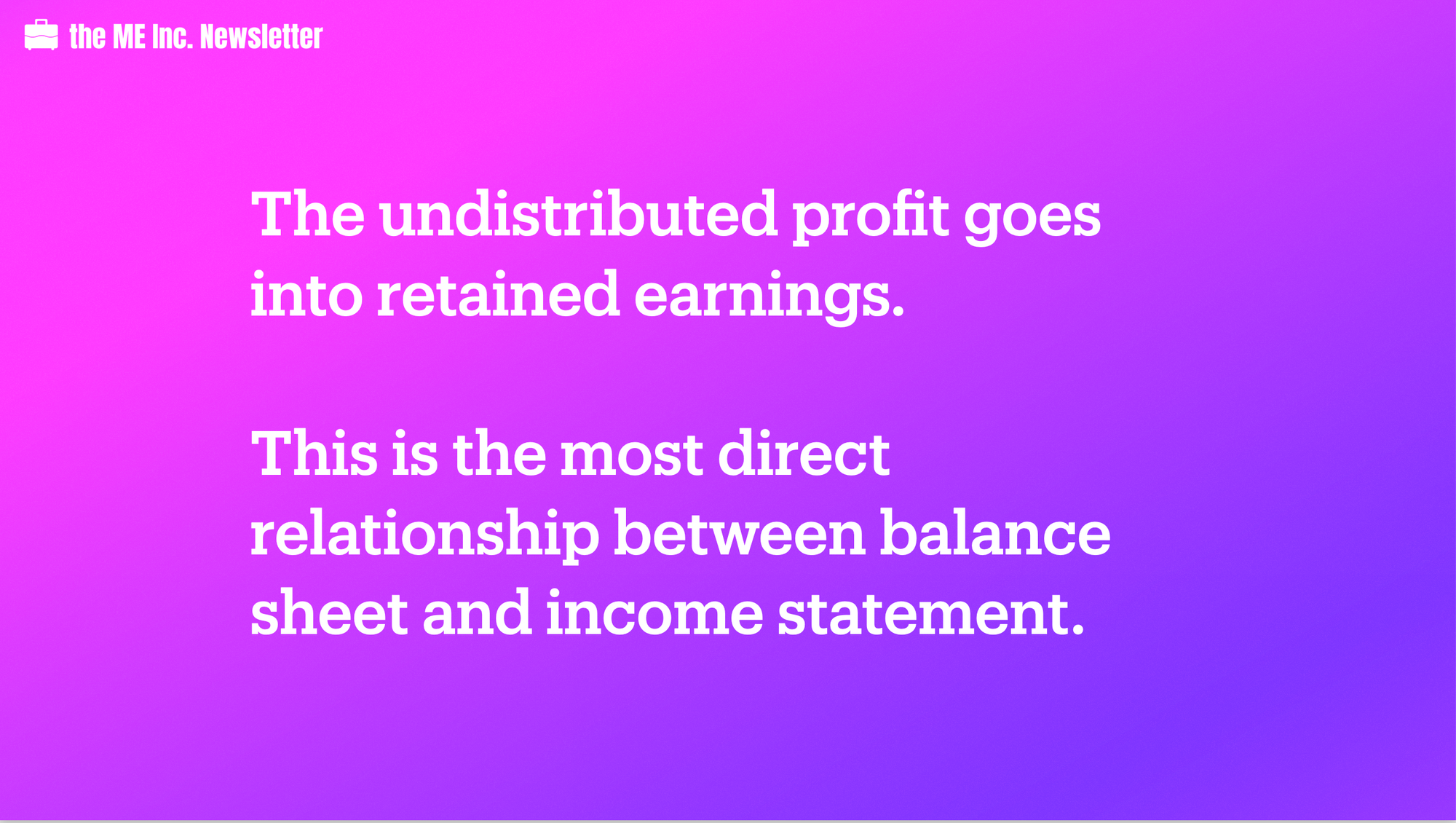
This 4.2 million should go into our balance sheet to increase the retained earnings. In other words, it increases the value of shareholders’ ownership rights.
This is the most direct relationship between balance sheet and income statement, and this relationship is connected by retained earnings.
Of course, later we will see another financial report cash flow. After we learn cash flow, we will find that the three financial reports make up an interesting combination. It will help us paint a full picture about the company’s story.
Sharing my learnings about the core skills on how to run life like a company in the Me Inc. Newsletter. Topics covered: Copywriting, Finance, Technology, and Productivity. Read my why here or join directly👇. No spams. Ever. – Michael
Welcome to the Me Inc. Newsletter.
Build yourself into a business, before you start one.
Learn. Grow. Build. Now.
function ml_webform_success_14362251() { var $ = ml_jQuery || jQuery; $(‘.ml-subscribe-form-14362251 .row-success’).show(); $(‘.ml-subscribe-form-14362251 .row-form’).hide(); } fetch(“https://assets.mailerlite.com/jsonp/918262/forms/119753320103413631/takel”)
In the balance sheet, we’ve already learned what our investment has become, and we can see if our initial investment’s value is guaranteed. But this is not enough – we want to know if we are making a profit.
That’s when the second financial statement comes in – Income Statement.
Within this process of money – things – money, the part that’s directly related to making money is when I sell my products. Once my products are sold, revenues are generated. Obviously, the revenue I receive comes at a price. When I sell a product, it no longer belongs to me; what I have lost here is the cost associated with acquiring the product.
In addition, in order to run a company I will need to pay for all kinds of bills, bills to keep the lights on, etc. These are called expenses.
As you can see, knowing if my company is making a profit is not easy. That’s why I need a report – the Income Statement– to help me understand it. Now, let’s see what a Income Statement looks like.
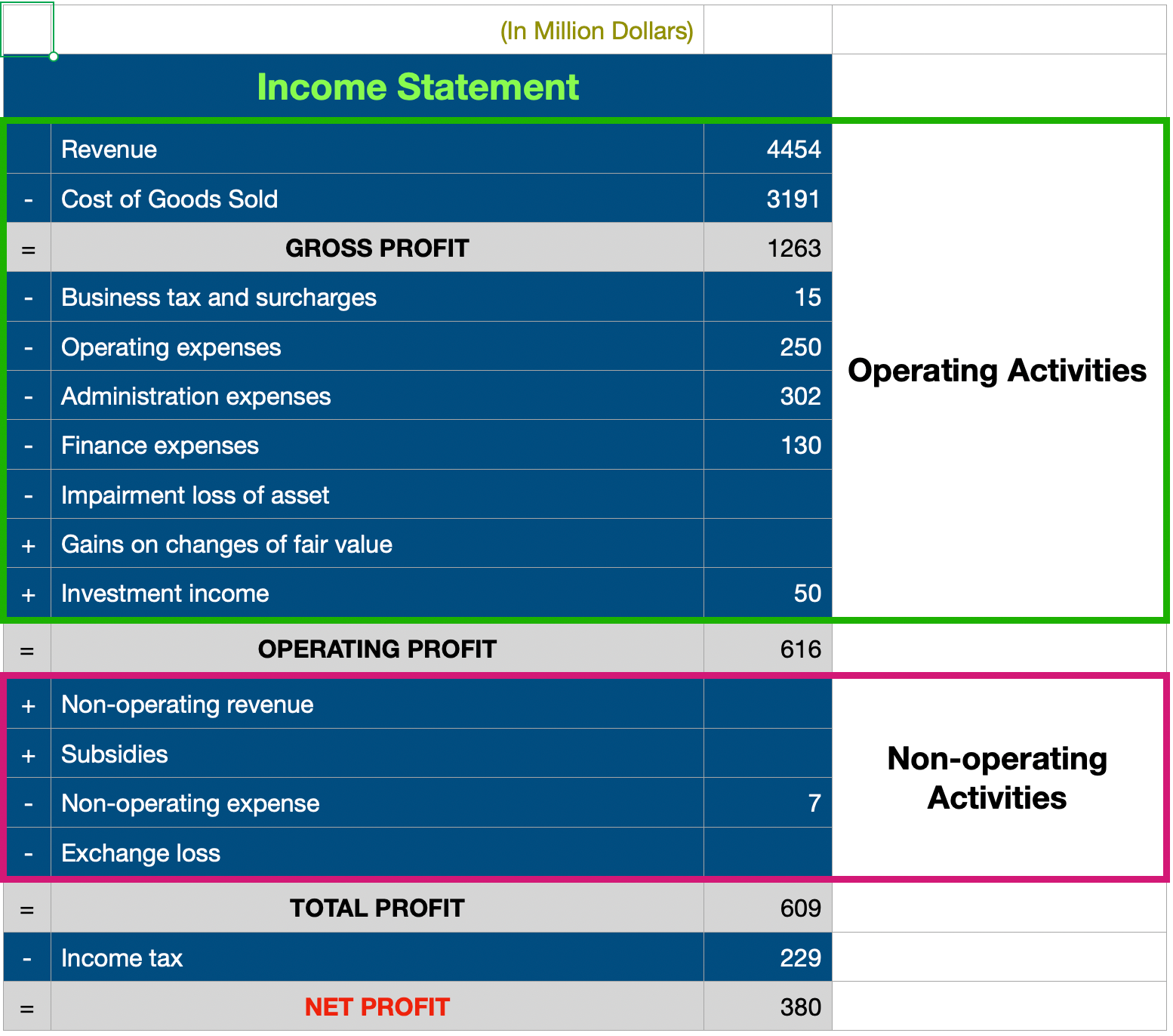
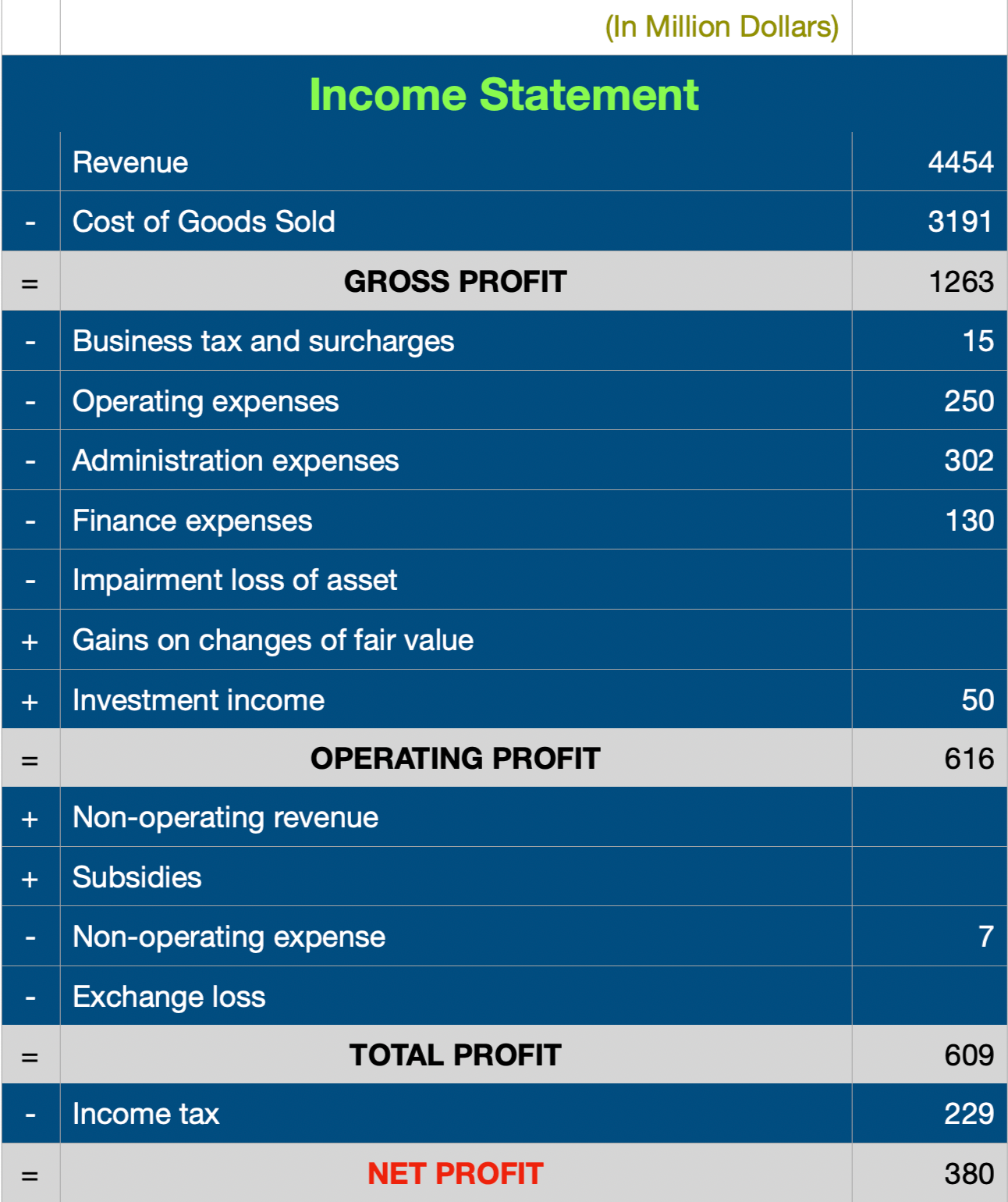
An income statement starts with the revenue and ends with the net profit. In between you will find numerous costs and expenses. The top of the income statement describes money generated or spent from the company’s operating activities, i.e. its main business operations, and the bottom describes that from the company’s non-operating activities. After going over this post, you will be able to understand all of them.
Operating Activities
Cost of Goods Sold
The first line item is revenue. When I sell a product, I will get revenue associated with the selling of the product, but I also lose the ownership of the product, therefore the cost of goods sold.
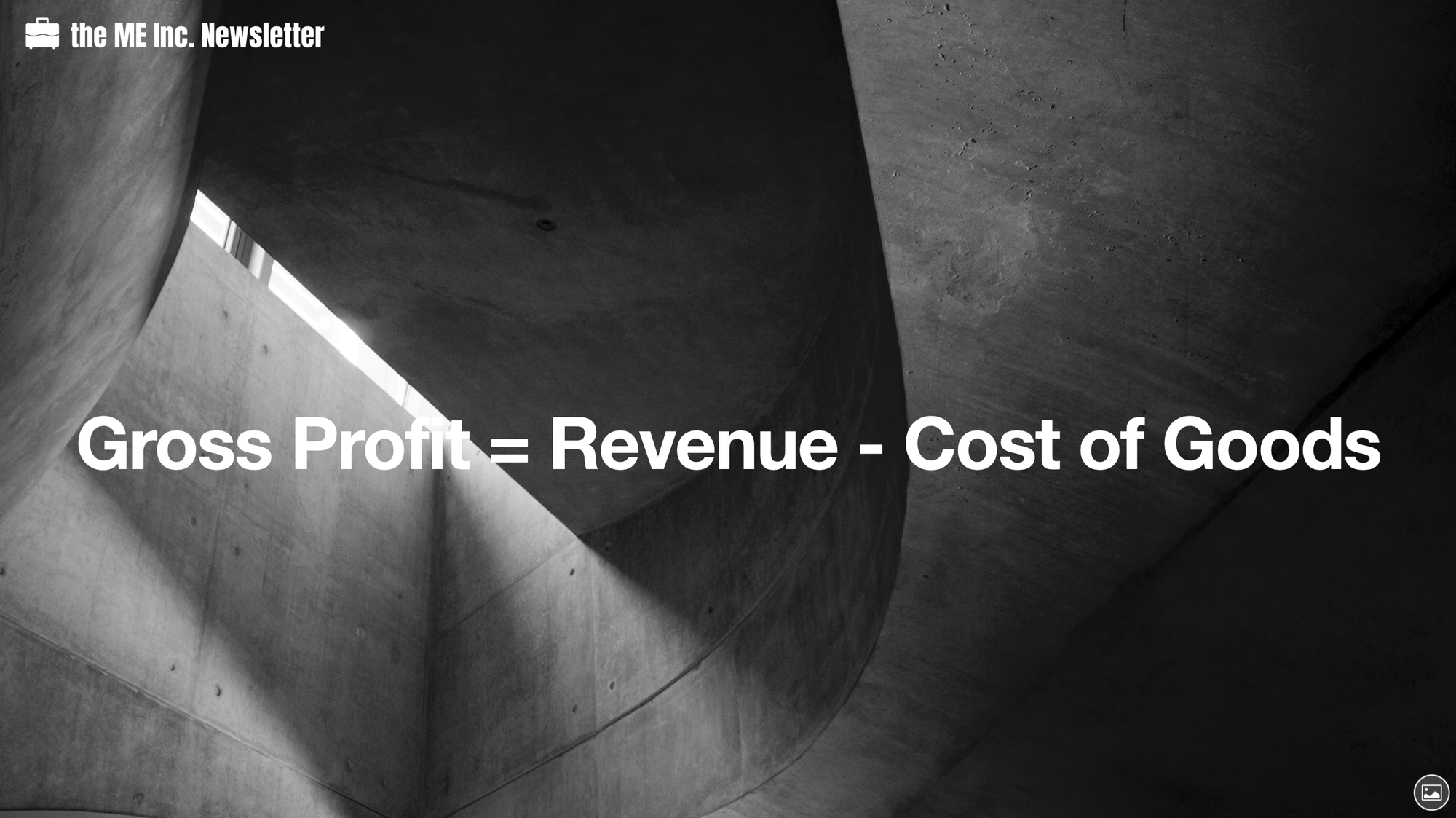
A commonly heard concept is gross profit. But what is gross profit? Well, revenue minus cost of goods sold is gross profit.
Business tax and surcharges
Now let’s look at the next item — business tax and surcharges.
Generally speaking, there are several common corporation taxes, i.e. business tax, value-added tax (VAT), and income tax. Taxation is a complex topic individual to each country, so not everything you find here will apply to your home country. For example, not all countries have business tax and VAT, and some countries have additional types of taxes. However, you should get a basic feeling of what fits where after this.
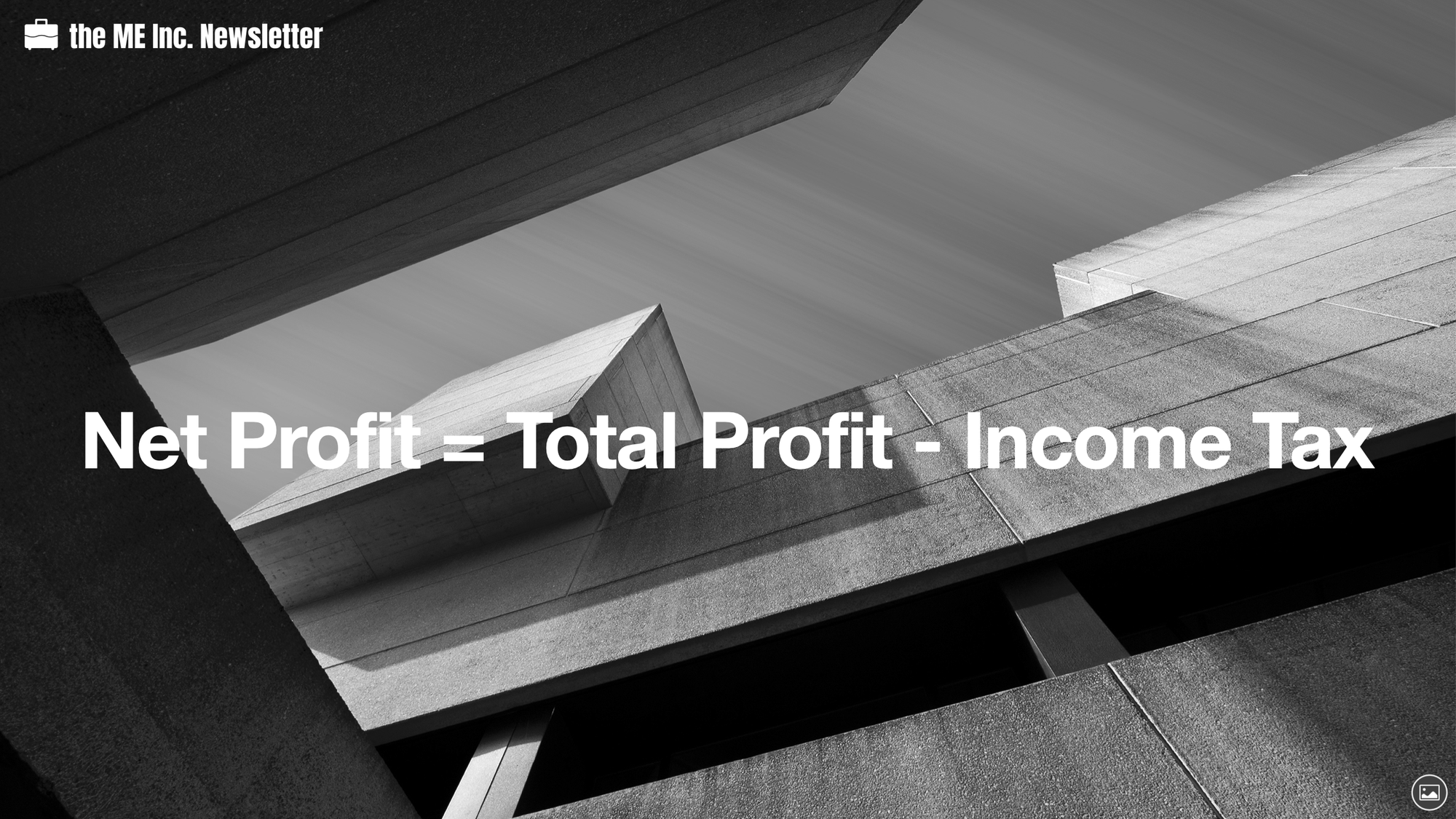
Income tax should only apply when there is income, or profit. Therefore, it should appear only after total profits. When I subtract income tax from total profits, I will get my net profit.
Business tax and surcharges means if I am operating a business, regardless of whether I make a profit or not, I will need to pay for the tax and charges. Categorically speaking, these kinds of taxes are called turnover taxes.
Both business tax and value-added tax are turnover taxes.
However, you may have noticed that VAT is nowhere to be found on the Income Statement. That’s because VAT doesn’t belong here.
Now why is that? Why is business tax on the income statement, but VAT is not, considering that both are turnover taxes?
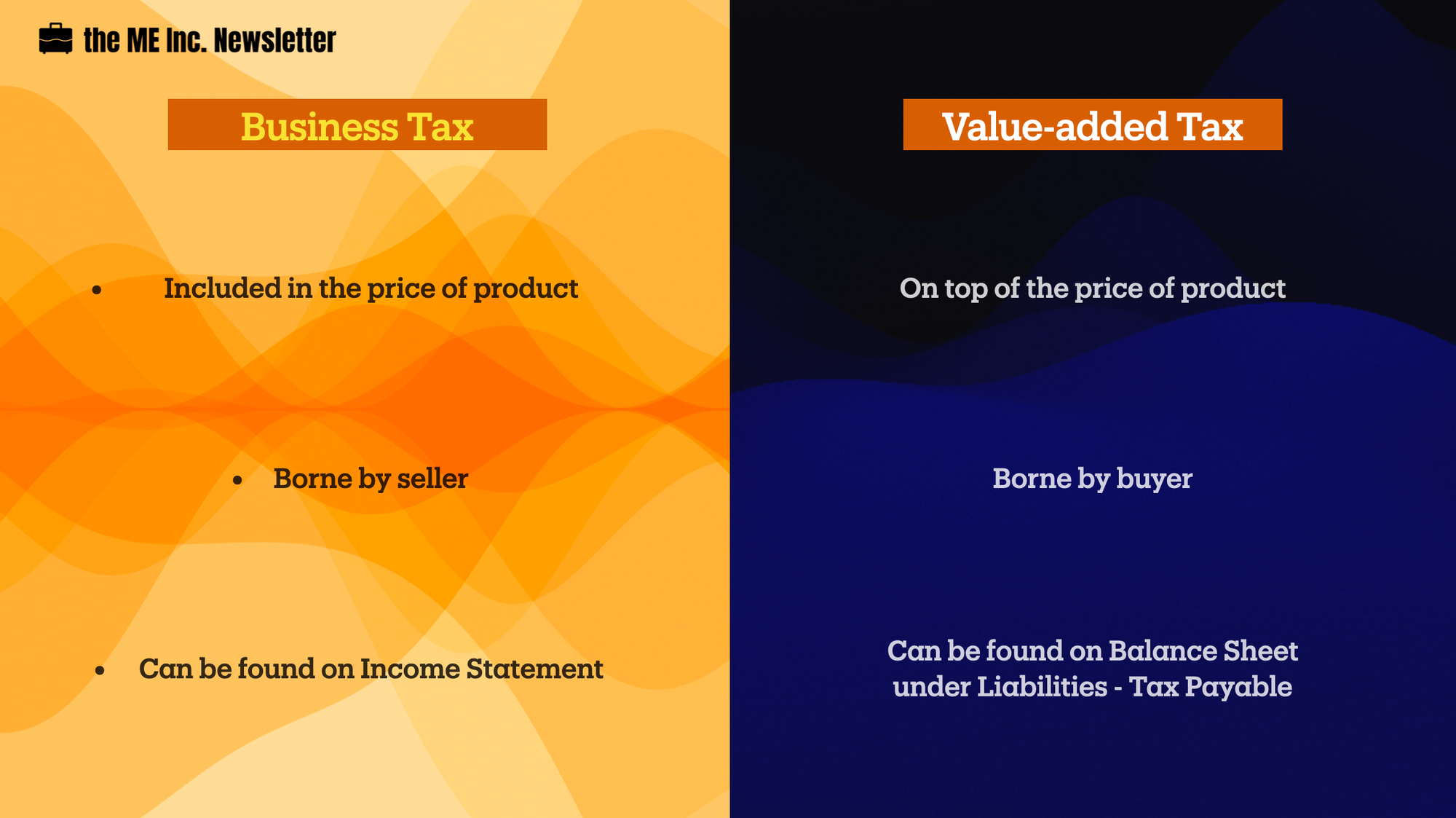
One major difference between business tax and VAT is that business tax is included in the price of product, but VAT is on top of the price of product.
Let’s see an example.
If I order food at a restaurant and pay 100USD for the dishes, the restaurant needs to pay business tax on that money. Let’s say the business tax rate comes at 5%. I will not pay 105USD because of the 5% business tax, meaning that the restaurant’s take-home revenue of my 100USD is 95USD.The business tax is included in the price, borne by the restaurant (seller).
In certain countries, you will encounter situations where you will see the extra tax amount on top of your standard meal prices. However, those taxes are NOT business taxes; they are a form of consumption tax.
But VAT is different.
For example, if I go to buy a computer, there will be VAT incurred for this transaction. Before applying the VAT, the computer price might be 1,000USD. After applying the VAT, the price comes up to 1,170USD because of a 17% value-added tax. So if I only pay 1,000USD, the seller won’t give me the computer. I will have to pay 1,170USD so the transaction can come through.
For this transaction, who paid for the 170USD VAT?
The consumer.
The second major difference between business tax and VAT is that business tax is borne by the business, i.e. the seller, but VAT is borne by the customer, i.e. the buyer.
Now you should understand why VAT cannot be found on the Income Statement.
Because the company pays for Business Tax, but consumers pay for Value-added Tax, the VAT on consumers shouldn’t be a company’s cost. That’s why we cannot find VAT on the Income Statement.
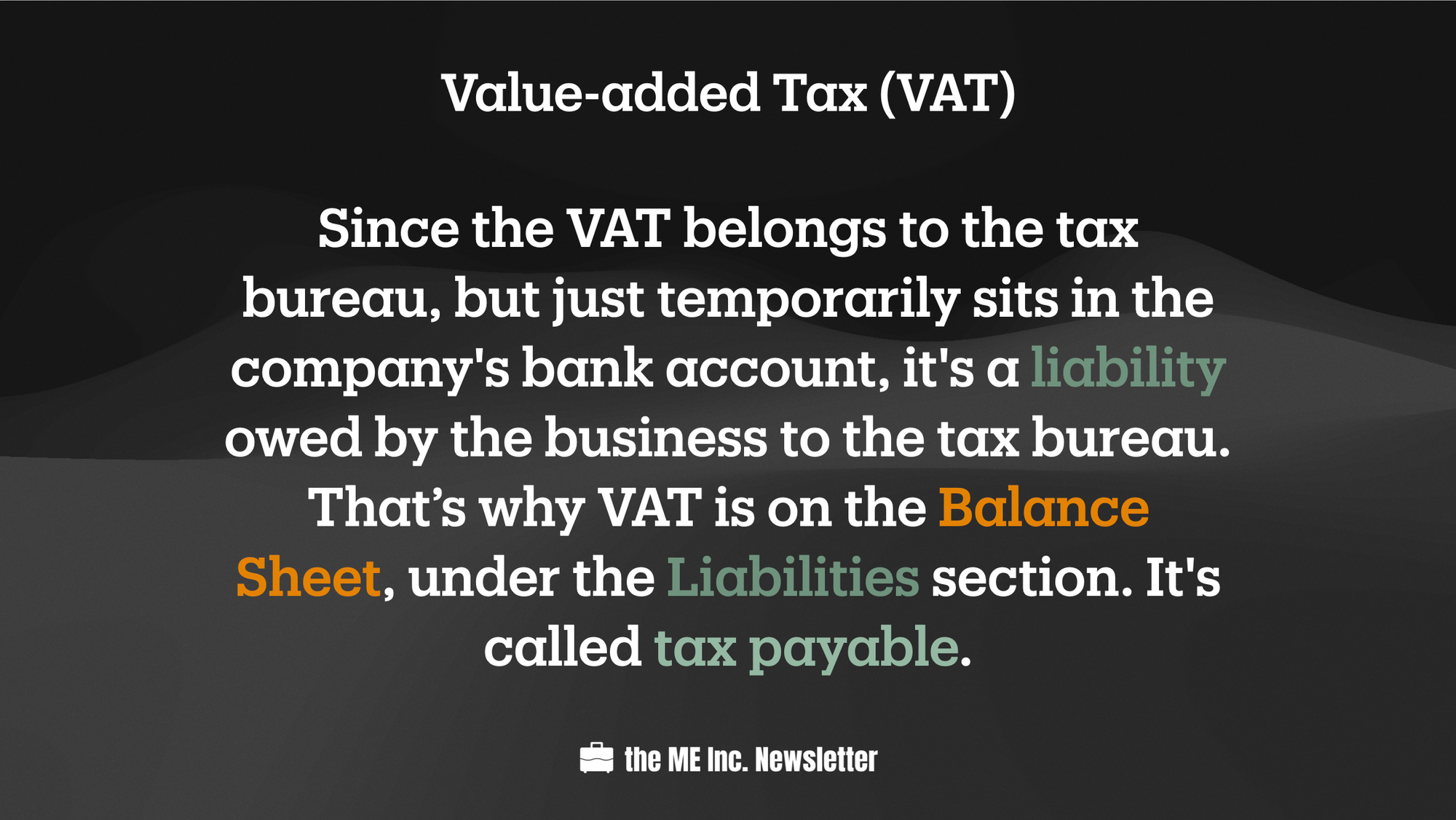
In practice, we as consumers don’t go to the tax bureaus every day to pay VAT on everything we’ve purchased. Instead, we give the VAT to the seller, and the seller will periodically pay the VAT withheld to the tax bureau. From the seller, i.e. the business’s perspective, that VAT should never be accounted for revenue. On the other hand, since the VAT belongs to the tax bureau, but just temporarily sits in the business’s bank account, it’s actually a liability owed by the business to the tax bureau.
For this reason, we actually can find VAT on the Balance Sheet, under the Liabilities section. It’s called tax payable.
After this tax item, we see three expense items: operating expenses, administration expenses and financial expenses. These three items are what we usually call period expenses.
Sharing my learnings about the core skills on how to run life like a company in the Me Inc. Newsletter. Topics covered: Copywriting, Finance, Technology, and Productivity. Read my why here or join directly👇. No spams. Ever. – Michael
Welcome to the Me Inc. Newsletter.
Build yourself into a business, before you start one.
Learn. Grow. Build. Now.
function ml_webform_success_14362251() { var $ = ml_jQuery || jQuery; $(‘.ml-subscribe-form-14362251 .row-success’).show(); $(‘.ml-subscribe-form-14362251 .row-form’).hide(); } fetch(“https://assets.mailerlite.com/jsonp/918262/forms/119753320103413631/takel”)
Operating Expenses
What is operation?
For a manufacturing company, its operations are manufacturing and sales. So what are operating expenses?
Operating expenses are related to the company’s operations, i.e. advertisement costs, transportation expenses, warehouse fees, etc.
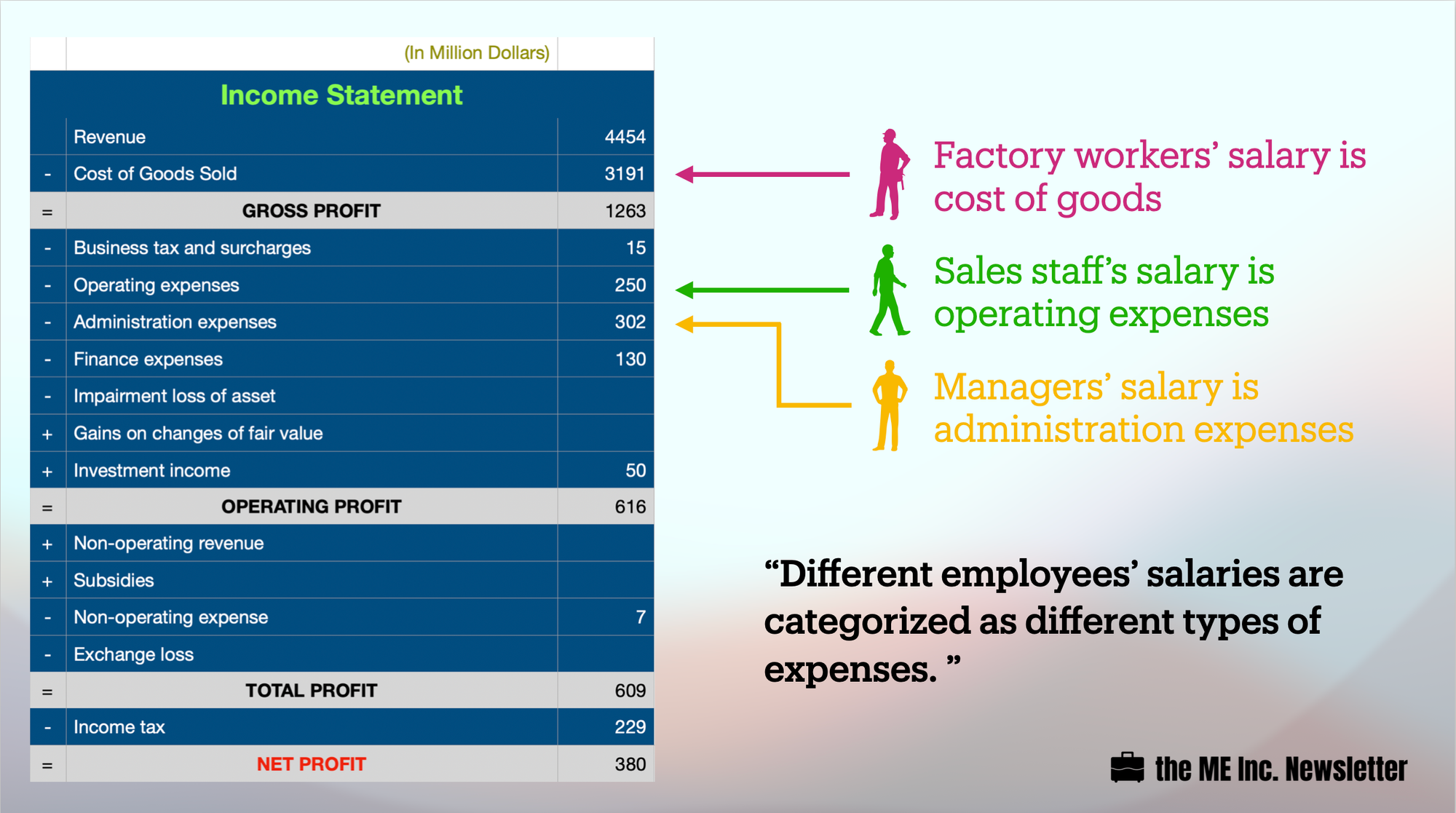
Expenses of different departments could fit in the operating expenses. For example, cost of promotions, salary of sales people, and various marketing expenses make up the operating expenses of sales departments. Another example would be company stores if the company has retail spaces. If the stores are leased, the rent paid out is operating cost. If the stores are owned by the company, the depreciation counts as operating cost as well.
Administration Expenses
Everything related to the management of the company is Administration Expenses. For example, the salaries of managers, administrative expenditures and depreciation on office building, etc., are all administration expenses.
One thing you might have already noticed is that different employee salaries are categorized as different types of expenses. For example, salaries of marketing and sales employees are operating expenses, but salaries of managers are administration expenses.
But what about wages of workers (in the context of a manufacturing company)? Where should this item fit in? Workers wages are direct manufacturing costs, so it should be put directly in costs of goods sold.
Depreciation of fixed assets should also be recorded in costs of goods sold, since fixed assets are directly used for producing the company’s goods. If the purpose of different fixed assets is different, the depreciation will go to a different category. For example, the depreciation of the stores is a sale expense, or operating expense, while that of an office building is an administration expenses.
Financial Expenses
Financial expenses are pretty straightforward; they are basically interests. Whether the interests you owe to the bank when you borrow, or the interests you earn from deposit savings from the bank. Since we are recording expenses, the former will be positive, i.e. money going out, and the latter will be negative, i.e. money coming in. In other words, when you are paying interests to banks, interest expenses are positive; when you are earning interests from banks, interest earnings are negative.
💡
Rare instances when financial expenses are negative Say a company has raised a large amount of money from investors, and they are not going to spend all of the money immediately. The money left in the bank will generate interest revenue. What if the money is raised by selling stocks?
The company may have already paid off most of its debt, so there is little interests to be paid out. In this case, the interest expenses may become negative. In other words, the company is actually making money from money.
You may not always find three expenses in your Income Statement. In some countries, operating expenses and administration expenses may be combined as one item on the income statement.
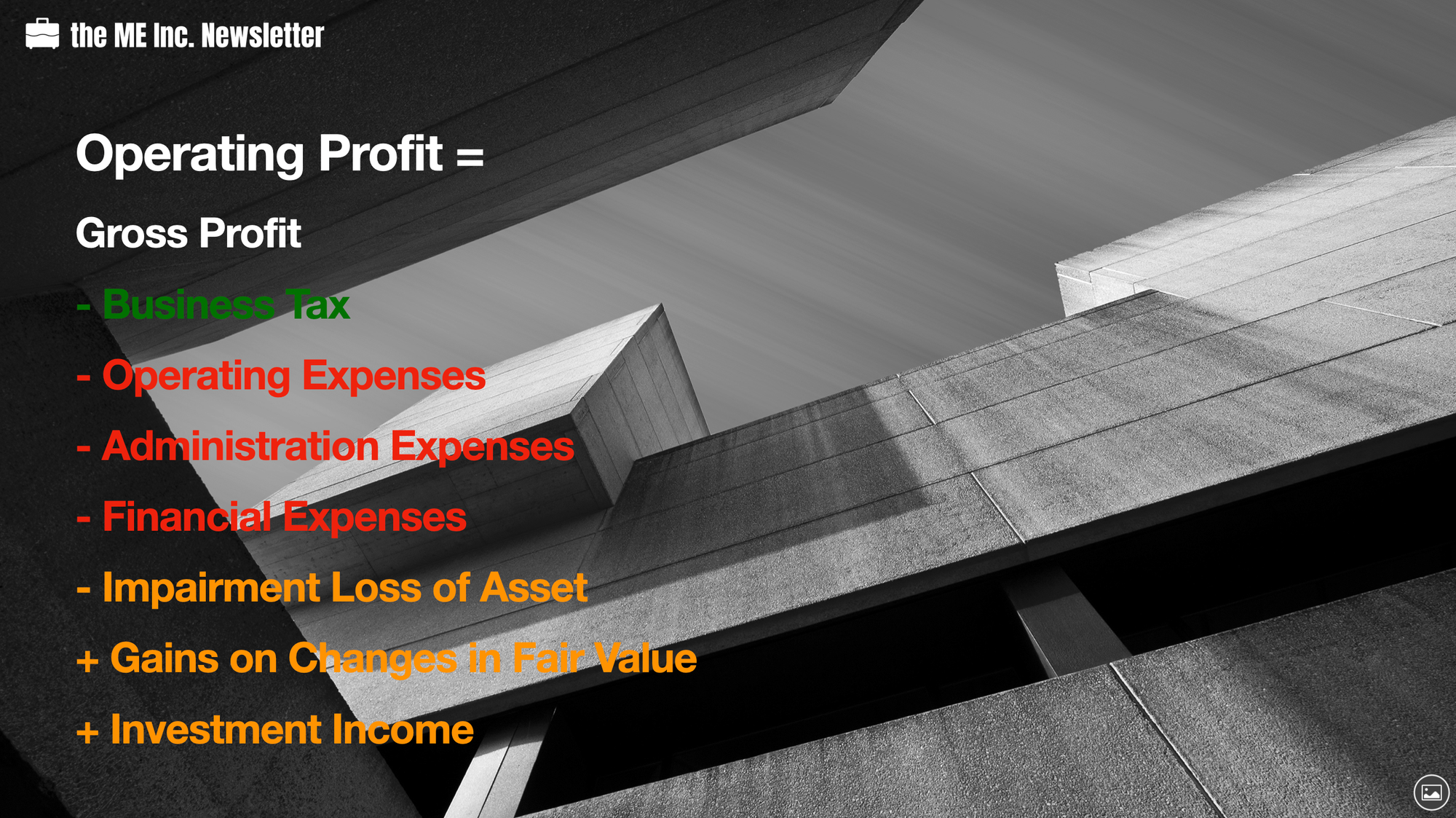
Recall that at the beginning we said that revenue minus costs of goods sold is equal to gross profit. Then we subtract the business tax and surcharges and the three expenses from gross profit, further closing in on our profit from operating the business.
However, between financial expenses and operating profit, there are still three items left, which are impairment loss of asset, gains on changes in the fair value, and investment income.
Investment Income
For small companies that haven’t made any external investments, there will be minimal need to worry about investment income. But let’s say my company has a subsidiary company, and the latter gives me a dividend. This dividend is my income from investment.
Investment is a special form of operating business, so we still consider it part as part of operating profit.
Impairment Loss of Asset/ Gains on Changes in the Fair Value
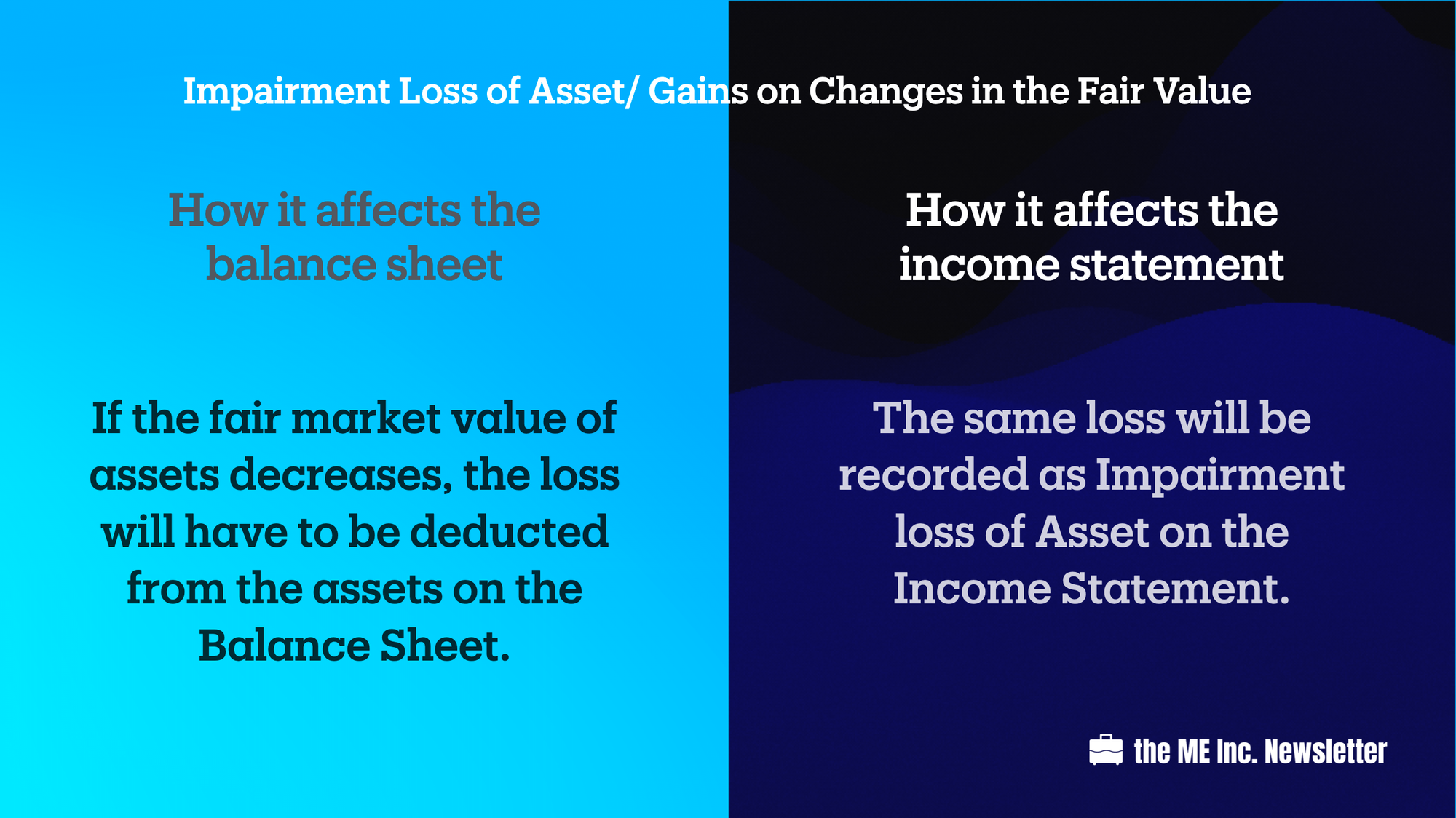
If you recall in assets valuation on the balance sheet, most assets are recorded with their historical costs, but financial investments and real estate investments are marked to market with their fair values. If the fair market value of any of the former two types of assets decreases, we will need to recognize the loss on the balance sheet.
To make matters worse, it also affects the company’s profits on the income statement.
💡
Let’s say on December 31 each year, we will need to check the fair values of our financial investment and real estate investments. By checking the market prices, we should be able to arrive at updated fair values of our assets.
If the asset price was 10USD last year and 15USD this year, I will get a 5USD gain. If it was 10USD last year and 5USD this year, I will get a 5USD loss. The new value of assets should be updated on the balance sheet, and the change (gain or loss) should be updated on the income statement.
So far, we have subtracted the costs of goods sold from our revenue. We then paid the business tax and surcharges, as well as the operating, administrative, and financial expenses. After that we looked at our gain/loss from our investments and dividends generated from them. What’s left is our Operating Profit.
Sharing my learnings about the core skills on how to run life like a company in the Me Inc. Newsletter. Topics covered: Copywriting, Finance, Technology, and Productivity. Read my why here or join directly👇. No spams. Ever. – Michael
Welcome to the Me Inc. Newsletter.
Build yourself into a business, before you start one.
Learn. Grow. Build. Now.
function ml_webform_success_14362251() { var $ = ml_jQuery || jQuery; $(‘.ml-subscribe-form-14362251 .row-success’).show(); $(‘.ml-subscribe-form-14362251 .row-form’).hide(); } fetch(“https://assets.mailerlite.com/jsonp/918262/forms/119753320103413631/takel”)
Non-operating Profit
The two items below Operating Profit are non-operating revenue and non-operating expenses. Let’s look at non-operating revenue first.
Non-operating Revenue
What is a non-operating revenue? The straightforward answer is any revenue generated from non-operating activities.
Let’s look at an example first.
A company checks its inventory and finds the actual inventory exceeds that on the books. This is called Excess Inventory. In this case, the excess inventory is a form of non-operating revenue.
Another example is when a company sells its fixed assets.
We know that the goal of a business is to sell products to earn profits. Its fixed assets are required to produce products. However, there might be instances when the company decides to sell part of its fixed assets on an ad-hoc basis, and when it does, the sale will generate a large sum of money. This will also be recorded as a form of non-operating revenue.
Non-operating Expenses
We just talked about excess inventory as a form of non-operating revenue. Similarly, when we check our inventory but it turns out our inventory is less than what we’ve recorded on our balance sheet, we say there is a shortage on inventory, which is a form of non-operating expenses.
Things like losses caused by accidents such as natural disasters, i.e. fire, flood, etc., are also non-operating expenses.
Why do we list Non-operating Revenues and Expenses separately?
Let’s look at what non-operating revenues and non-operating expenses have in common. They are both unrelated to the company’s operating activities. These activities happen by chance and don’t have continuity in the company’s plans.
What’s the benefit of listing non-operating revenues and expenses separately? Let’s look at this example.
Assuming that I have two companies. Both companies have a profit of 10 million dollars. For the first company, 9 million is operating profit and 1 million is non-operating profit. For the second company, 1 million is operating profit and 9 million is non-operating profit.
Which company would you like to invest?
For me, it is a no-brainer. I definitely will invest in the first company, even though both companies make the same amount of profit.
The reason is simple. I believe the first company will make at least the same amount of money the next year, but I highly doubt that the second company will manage to do the same.
Why?
Because the most profit the second company generates is from non-operating activities, i.e. projects that are not continuous.
This is the benefit of listing operating profit and non-operating profit separately. It not only tells you how much profit the company makes this year, but also provides information on whether the profit is dependable. In this way, we will be able to predict the company’s future profitability based on this year’s income statement.
Subsidies and Exchange Gain and Loss
In some countries, companies might be able to receive government subsidies for participating in certain economic activities as a way to boost investment in certain industries. These subsidies are also a kind of non-operating revenue. However, they should be listed separately, and we call it subsidies. Subsidies should also be recorded in the non-operating profit and loss section.
Some companies might operate in multiple countries, so they might receive payment in one currency but pay suppliers in another. However, currency exchange rates change every day, and when they do, my profits may suffer a loss or post a gain. This is called exchange gain (or loss). Exchange gain (or loss) should also go in the non-operating profit and loss section.
Getting Close to Our Actual Profit!
Total Profit
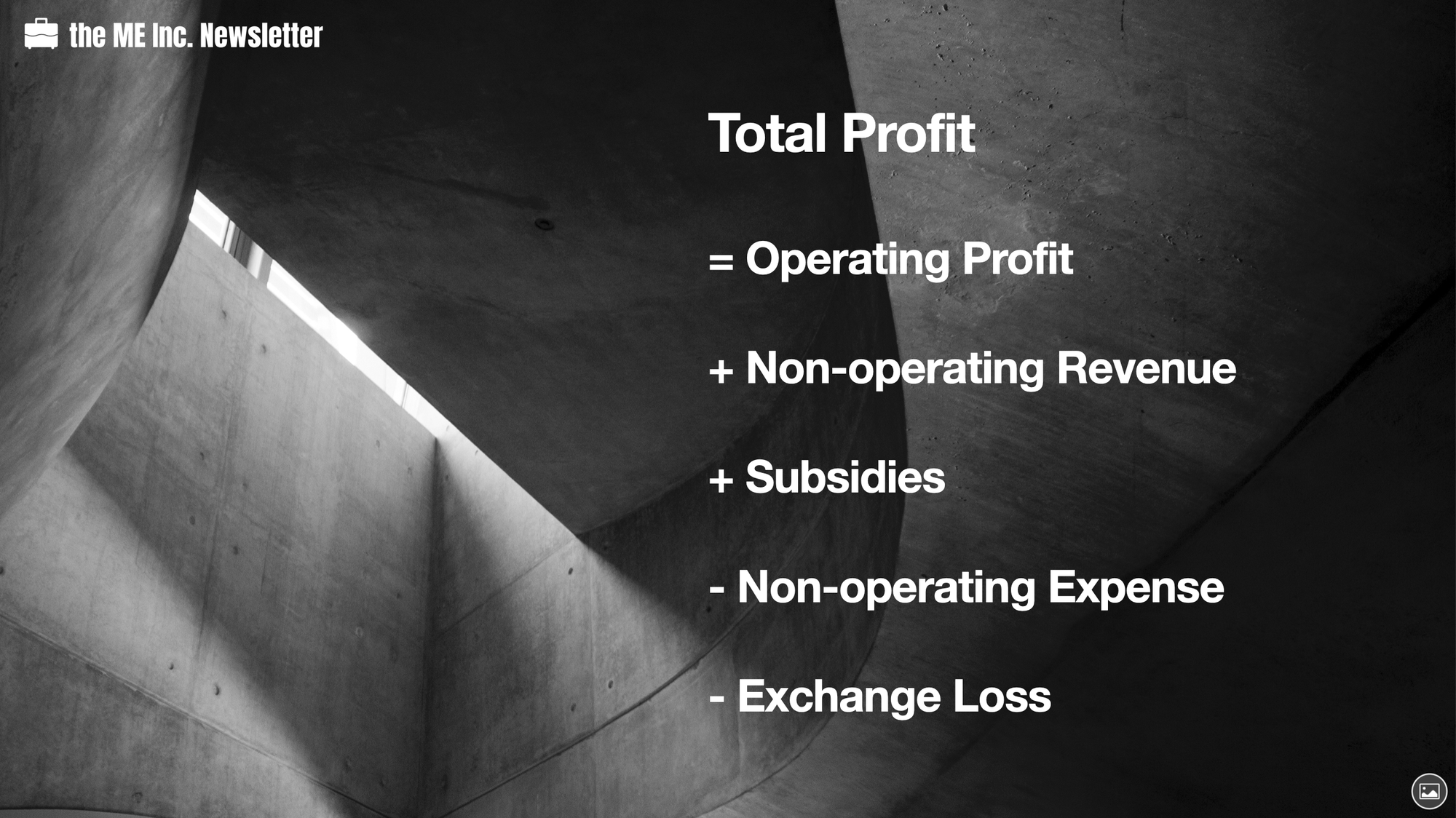
By subtracting our non-operating expenses and adding our non-operating revenues onto the operating profit, we have arrived at our Total Profit. Remember: subsidies and exchange gains or losses should also be taken account in the non-operating profit.
Net Profit
Now we’ve come to the final part. We have made some profit from the operations of the business, and have paid out our non-operating losses. After that, we still have quite some (total) profits.
Now there is still one thing left: income tax.
Depending on your country and industry, etc., business income taxes can range from 15% to 25%, or even more. For example, China has a business income tax of 25%, but can go as low as 15% for tech companies.
At this point, most people like me would assume that 75% of the total profit will be our net profit.
However, this is not the case. Let’s look at our Income Statement again.
Apparently, the net profit(380) is less than 75% of the total profit(609 times 75%=456.75). In other words, the company paid more taxes. But why?
To understand this, we first need to know where the 25% business income tax has been applied. Should it be applied to the Total Profit?
The answer is no. Actually the company will need to pay 25% of its taxable income to the tax bureau as its income tax.
Unlike total profit, which is calculated based on the accounting standards, taxable income is calculated based on the tax law. That is why our total profit is different from our taxable income. Here’s an example.
Let’s say our company buys some advertisement, which is a form of operating expenses. According to accounting standard, we should be able to record the ad costs on the Income Statement, regardless of how much we’ve spent. However, the tax law actually stipulates that if a company’s advertising costs exceed a certain percentage of revenue, the exceeding portion cannot be deducted from its taxes.
If we assume that this percentage cap is 2% and our company’s revenue is 100 million, our tax-deductible portion will be 2 million. However, we actually spent 20 million on advertising. So even though all 20 million should be recorded as operating expenses, we actually will have to pay income tax on 18 million of those advertising costs. The taxable income now exceeds total profit by 18 million.
This is what the income statement is all about. So what kinds of information does an income statement tell us from an economic perspective? We will go over it in our next post.
Sharing my learnings about the core skills on how to run life like a company in the Me Inc. Newsletter. Topics covered: Copywriting, Finance, Technology, and Productivity. Read my why here or join directly👇. No spams. Ever. – Michael
Welcome to the Me Inc. Newsletter.
Build yourself into a business, before you start one.
Learn. Grow. Build. Now.
function ml_webform_success_14362251() { var $ = ml_jQuery || jQuery; $(‘.ml-subscribe-form-14362251 .row-success’).show(); $(‘.ml-subscribe-form-14362251 .row-form’).hide(); } fetch(“https://assets.mailerlite.com/jsonp/918262/forms/119753320103413631/takel”)
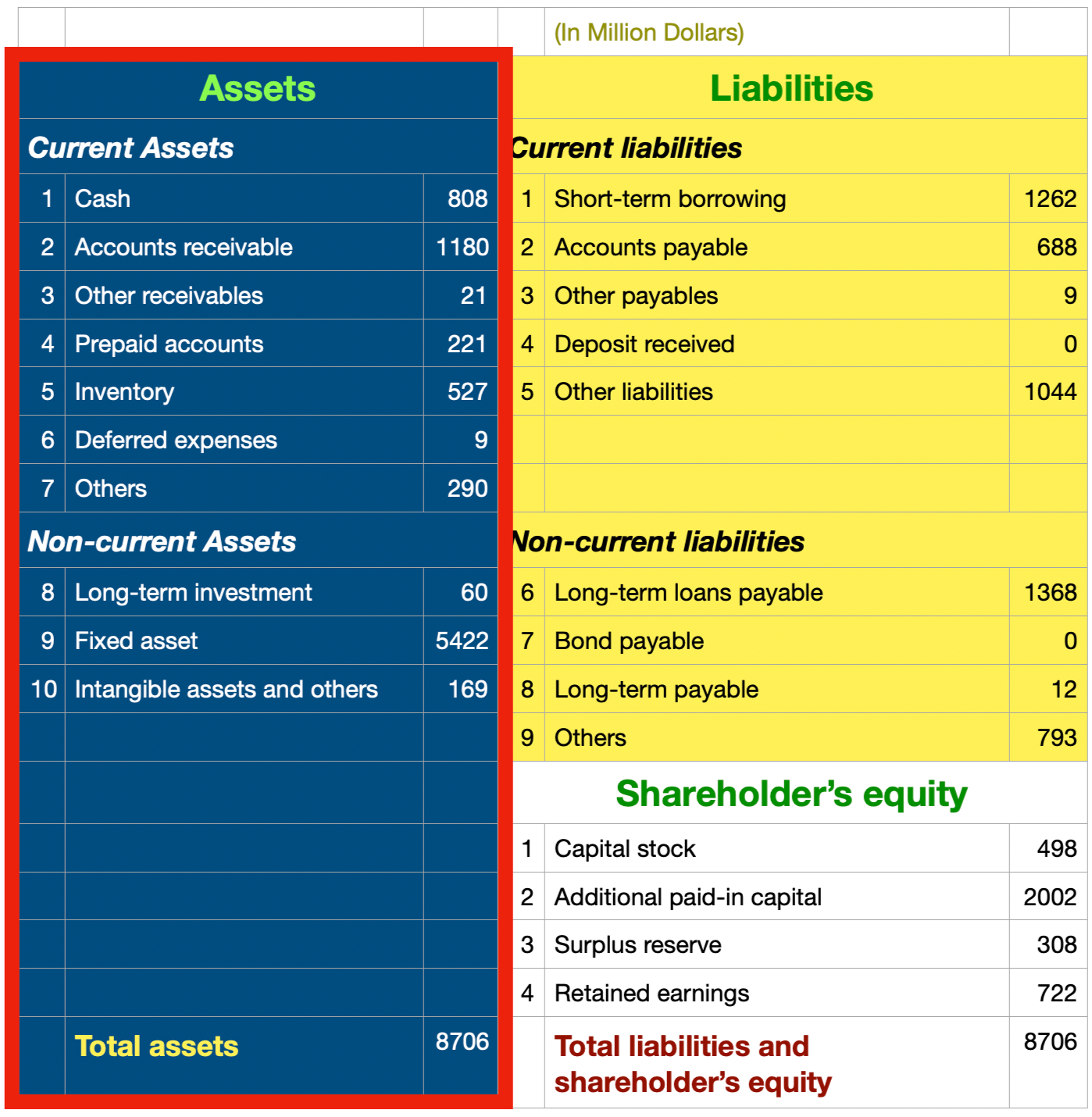
Let’s start from the left side of the balance sheet – Assets.
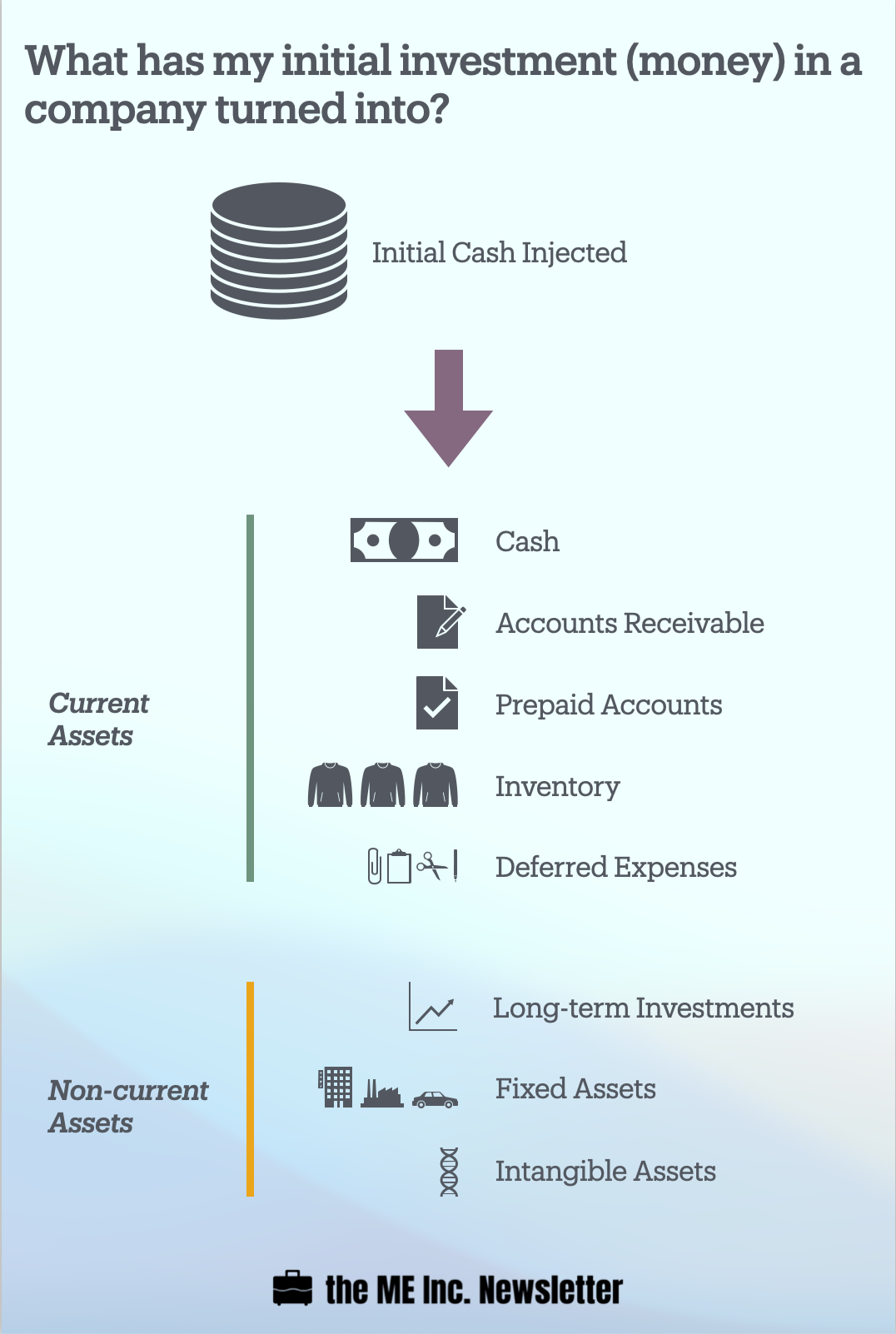
Before we ask the question “how much have I made?”, we want to make sure that the money I put into the company in the first place is safe. In other words, I want to know what the invested money has turned into.
What has my investment (money) in a company turned into?
This is what the left side of the Balance Sheet – Assets – tells us. Instead of just a pile of cash lying in the bank, some has become accounts receivable, some raw materials, finished goods , or product in progress, some factory plants, cars, computers, and office buildings, some rights of the land, patents and proprietary technology. And some are still lying in the bank in the form of cash. Essentially the Assets on the Balance Sheet tells us what our originally invested money has been used for.
Understanding Liabilities and Shareholders’ Equity
What does the right side – Liabilities and Shareholder’s Equity – tells us?
The right side tells us where your money comes from. While I might come up with a certain amount of money out of my personal pocket, I might also borrow money from the bank as loans. On top of that, I might also owe money to suppliers, customers, employees, or the Tax Bureau, etc.
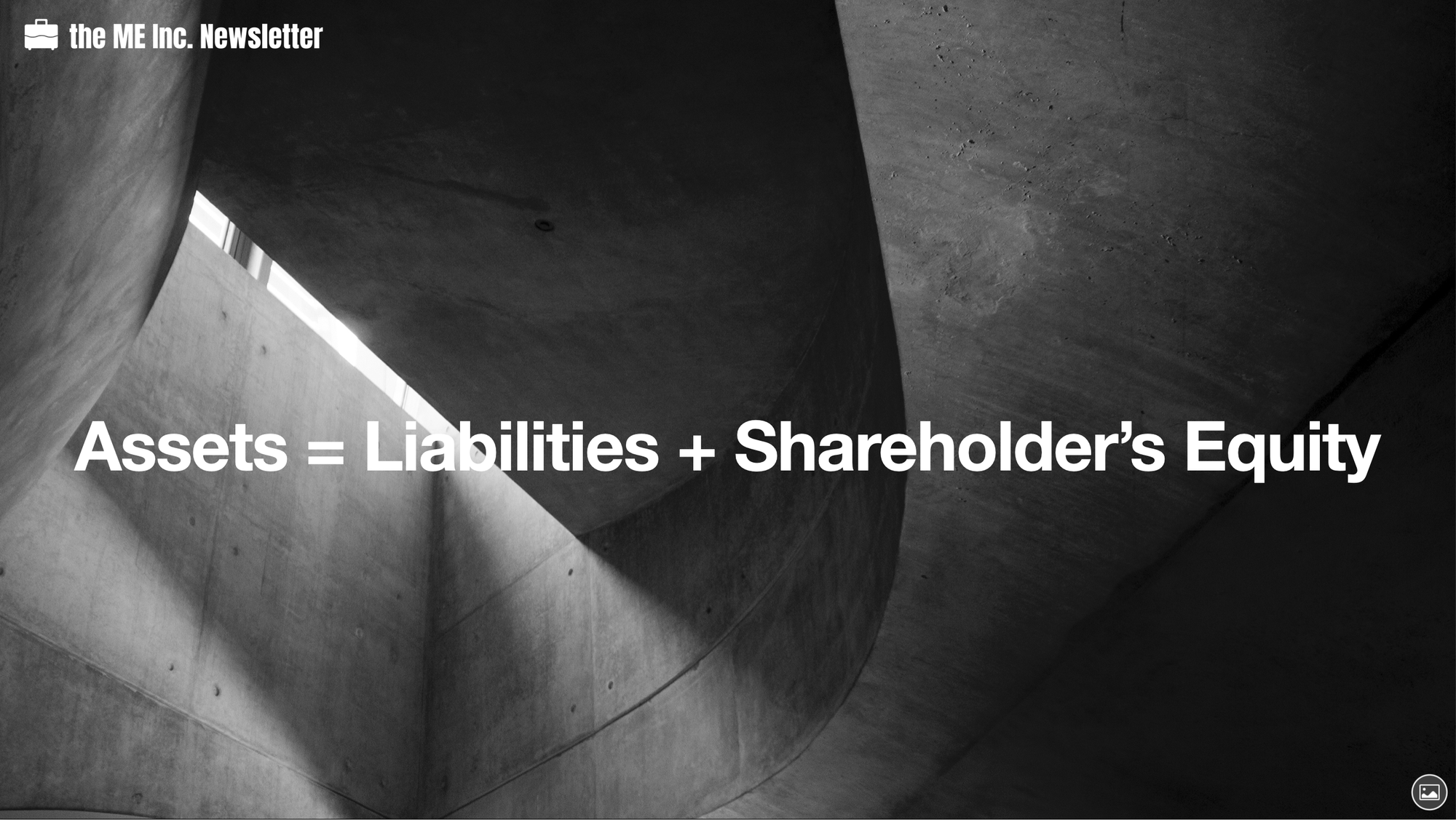
Assets = Liabilities + Shareholders’ Equity
Obviously, the money raised (the right side of Balance Sheet) must be equal to the money spent (the left side of Balance Sheet). I cannot spend money I don’t have; or put it in another way, if I want to spend money I don’t have, I will have to borrow it from somebody else, thus owing them debts, and I cannot create assets out of thin air.
Assets = Liabilities + Shareholders’ Equity
Assets equal Liabilities plus Shareholders’ equity is the most basic logic on the Balance Sheet, andit is also the most basic in accounting.
💡
Assets = Liabilities + Shareholders’ Equity is considered an axiom. It is always correct, and must be obeyed in any financial statement.
If you see a company’s statements do not conform to this relationship, the only possible explanation is that the statements are wrong. The equation must be obeyed at all times.
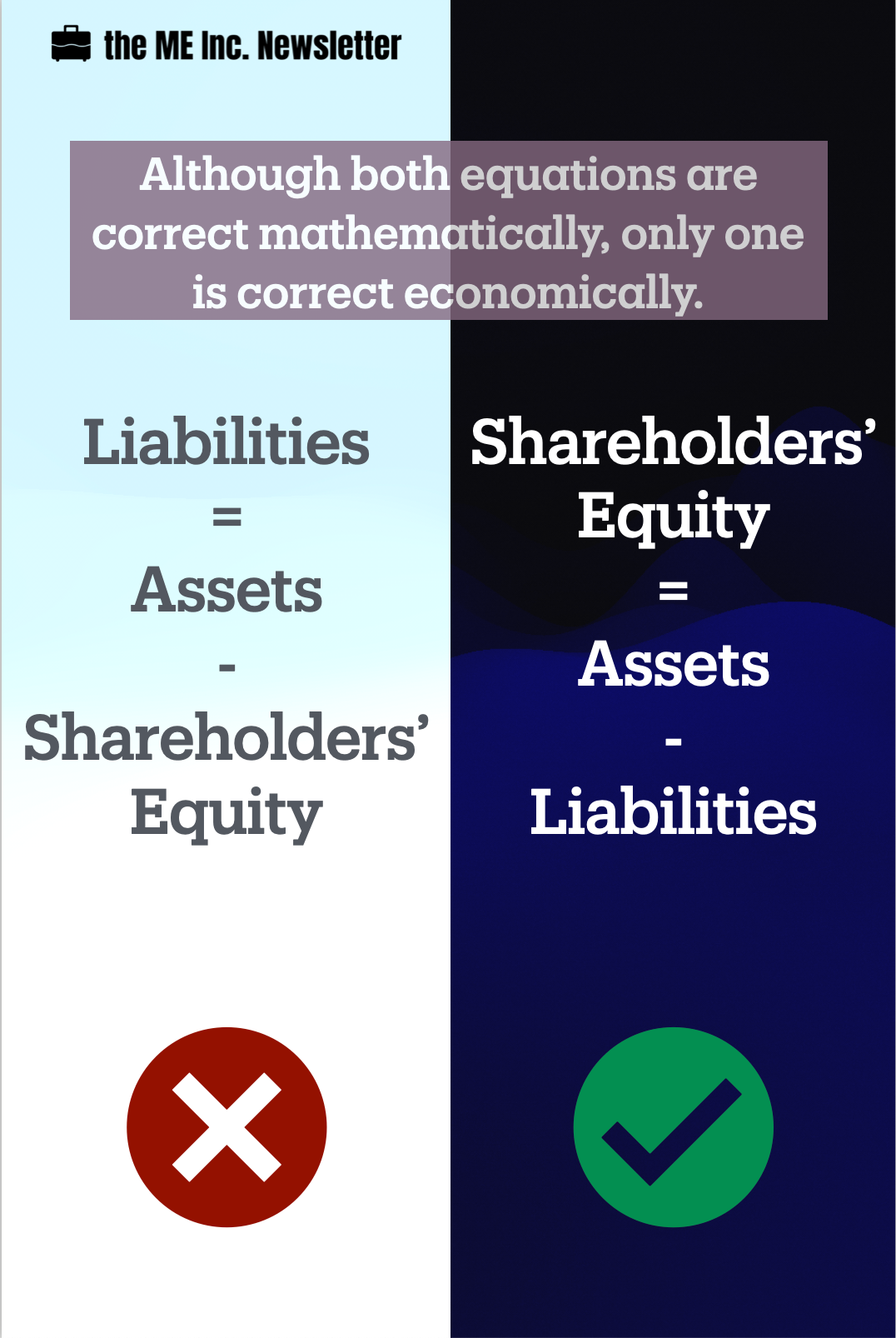
The formula that assets equal liabilities plus equity can be easily restructured into two equations:
By moving liabilities to the left, the equation becomes liability equal to the assets minus equity
By moving equity to the left, the equation becomes equity equal to assets minus liabilities
From a mathematical point, both restructured equations are correct. But from an economic aspect, only one is correct. Which one do you think it is?
Well only the second – shareholders’ equity = assets – liabilities – is correct. Why is that?
Let’s look at the first.
The first equation means that after we allow shareholders to take back the money invested from assets, the remaining amount belongs to the bank. The owner of the company becomes the bank, which is not true.
On the other hand, the second equation means that after the company pays all the debts we owe to the bank and the rest of creditors, the remaining assets belong to shareholders. The shareholders own the company.
In other words, the shareholders own what’s left after the company repays all of the liabilities. This is called residual claims.
What if the company runs well and its assets actually have appreciated over time (great news!)?
Well the bank will not ask you to repay more than your debt for your profitable business, since the debt to the bank is fixed. Therefore, the shareholders own the asset appreciation.
But if the company is running poorly, and its assets actually become devalued over time, the bank will not grant you to repay less debt. Then you might run into a financial crisis. My debt to the bank is always fixed, so the asset depreciation has to be borne by me – the shareholder.
Then what is the ultimate goal for a company? A company should be making money for shareholders.
Recall that at the beginning, I’ve established that before I ask if I’ve made any money from the company, I want to know if my investment, i.e. my principal, is still safe, or what it has become. The balance sheet helps me answer that question. It gives me a breakdown of all items that my money has become, and has put a dollar amount behind each item. The asset items are the resources I have in running the company.
If the balance sheet tells me that the total asset is worth 100 dollars, does it mean that the company has 100 dollars worth of assets now? In the past year, i.e. having this 100 dollars at all times over the past 12 months?
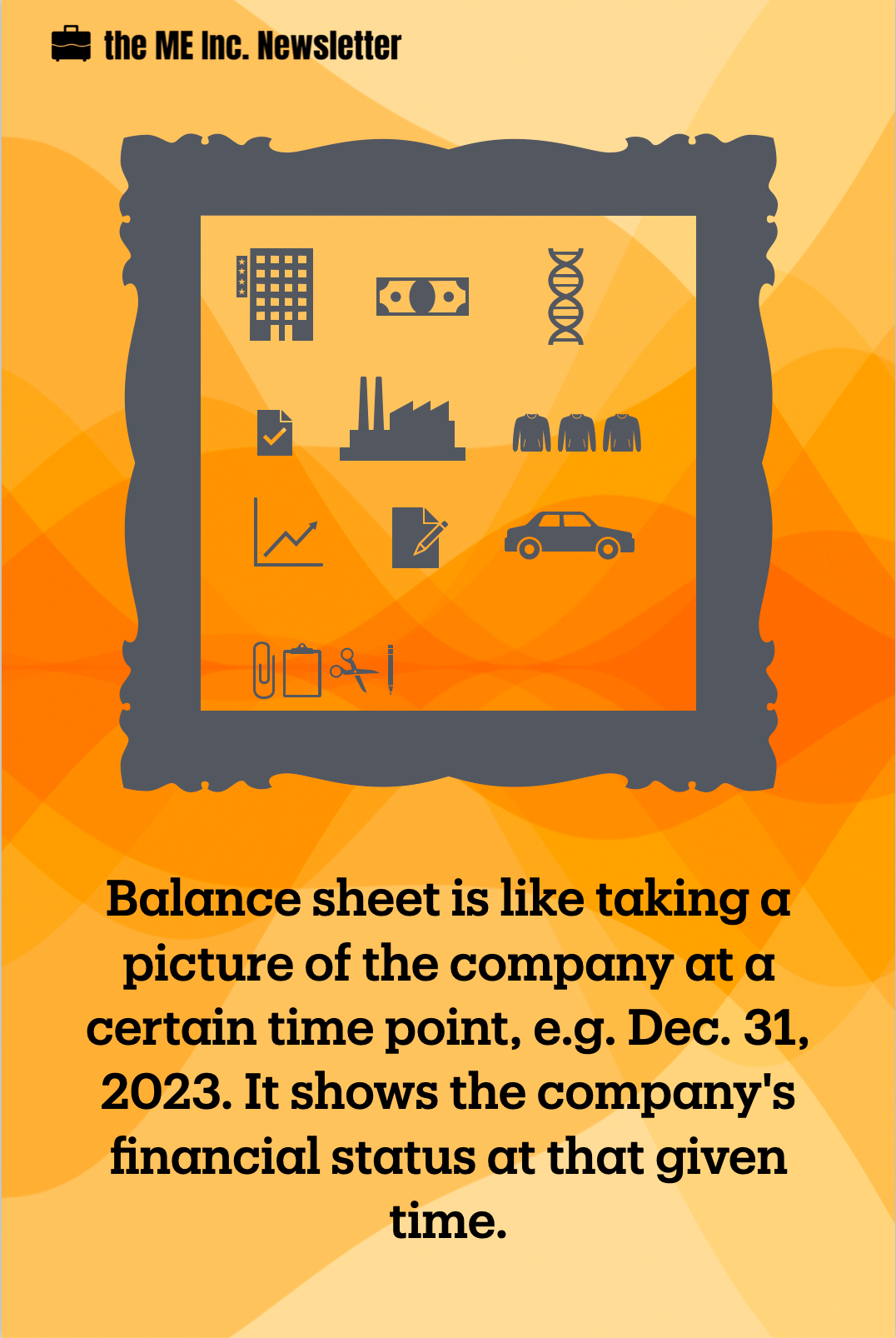
Of course, the first explanation is correct. That is, the company has 100 dollars worth of assets at this particular moment. It’s like I’m taking a photo of the resources of the company, documenting what it has right now, without bothering whether it will change into in the future. Neither do I care what it looks like before the picture is taken.
Assets vs. Physical Properties
Asset and physical property are two different concepts.
Here physical property means something tangible, i.e. physical things that I can touch. What could be an asset item that’s not a physical property?
Let’s look at the Assets on the balance sheet.
Among all asset items, we see things such as accounts receivable, prepaid account, etc., that are just my rights. Even though I do own these rights to future claims, I cannot touch such a “right”, since it doesn’t have a physical form. Sometimes I don’t even have a certificate for them like a contract. However, we still say that this is an asset.
On the contrary, sometimes we do have physical properties in presence, but they are NOT our assets.
For example, I may rent someone else’s equipment. Even though I have the right to use it during that time, the equipment is not an asset item on my balance sheet. Another example would be the products I sell as a commissioned agent. Even though these products are stored in my company’s warehouse, they are not my assets.
Relationship between Assets and Costs/ Expenses
If you recall, there is an item called deferred expenses on the Balance Sheet that we discussed previously. Deferred expenses are really assets, but they will partially get expended as time goes by. Same thing happens for fixed assets and long-term deferred expenses. They gradually wear out, and the wear and tear become depreciation.
This depreciation is a kind of cost; put it in other words, assets today are costs tomorrow. They are the same thing in different times.
Now we understand why we need a balance sheet; since our investment in the company has now become a variety of things, we want to know the value of my principal investment. And the Balance Sheet can help us do just that – it describes the financial position of our company at a particular point of time.
Sharing my learnings about the core skills on how to run life like a company in the Me Inc. Newsletter. Topics covered: Copywriting, Finance, Technology, and Productivity. Read my why here or join directly👇. No spams. Ever. – Michael
Welcome to the Me Inc. Newsletter.
Build yourself into a business, before you start one.
Learn. Grow. Build. Now.
function ml_webform_success_14362251() { var $ = ml_jQuery || jQuery; $(‘.ml-subscribe-form-14362251 .row-success’).show(); $(‘.ml-subscribe-form-14362251 .row-form’).hide(); } fetch(“https://assets.mailerlite.com/jsonp/918262/forms/119753320103413631/takel”)